Pickleball has quickly become one of the fastest-growing sports in the United States. Its mix of quick rallies, rapid lateral movements, and social appeal attracts players of all ages and skill levels. While it's often described as a low-impact sport, the game still places repetitive stress on the knees, ankles, elbows, shoulders, and other joints.
Many pickleball players notice soreness after long matches, tournament weekends, or frequent practice sessions. Sudden stops, quick directional changes, and repetitive paddle motions can all contribute to excessive strain over time.
That's where pickleball braces, supports, and compression products can play a role. If you're looking for extra stability, targeted compression, or support during active use, the right brace may help you stay comfortable and confident on the court.
From knee braces and ankle supports to compression sleeves and elbow straps, support products are often used as part of a broader approach to staying active and managing the physical demands of the game.
If you're looking for support designed specifically for the demands of pickleball, explore BioSkin's Pickleball Collection to find options for the knees, ankles, elbows, wrists, and more.
Why Pickleball Players Often Need Braces and Supports
Pickleball is often considered a lower-impact sport than tennis, but that doesn't mean it's easy on the body. A typical match involves frequent changes of direction, quick reactions, and repetitive movements that can place ongoing demands on the joints, ligaments, and muscles.
For many players, discomfort doesn't come from a single event. Instead, it develops gradually after long matches, tournament weekends, or playing multiple times per week. Braces and supports are often used to provide targeted support, compression, or additional stability during activity and recovery.
The movements behind common pickleball aches
The fast pace of pickleball requires players to move efficiently in a relatively small space. While the court is smaller than a tennis court, rallies often involve repeated movements that challenge the lower body and upper extremities.
Lateral movement
Quick lateral movements are a constant part of pickleball. Shuffling side to side at the kitchen line and reacting to wide shots can place stress on the knees, ankles, and supporting ligaments. Players who have experienced ankle sprains or previous knee injuries may notice these demands even more.
Quick starts and stops
Pickleball requires frequent acceleration and deceleration. Sudden starts and stops place forces through the knee joint, ankles, calves, and thighs as players move to reach the ball and regain position on the court.
Reaching and lunging
Many points involve reaching for low shots or lunging toward the sidelines. These movements can challenge balance and stability while placing additional demands on the muscles and joints that help control movement.
Repetitive paddle motions
Serving, dinking, volleys, and groundstrokes all involve repetitive motions of the wrist, elbow, shoulder, and arm. Over time, some players develop irritation around these areas, including conditions commonly referred to as pickleball elbow or tennis elbow.
Most common areas of discomfort
While every player is different, certain areas tend to experience more stress during regular play.
Knees
The knees absorb forces during lunging, pivoting, and quick directional changes. Players with a history of knee injury or those who spend long days on the court often look for additional knee support during activity.
Ankles
Ankles help control balance and movement during side-to-side play. Repeated cutting movements and sudden changes of direction can challenge ankle stability, particularly for players who have previously experienced ankle sprains.
Wrists
The wrist plays an important role in paddle control and shot placement. Repetitive paddle motions may contribute to wrist soreness, especially during periods of increased play.
Elbows
The elbow is involved in nearly every shot. Repetitive gripping and swinging can place stress on the tendons around the joint, leading some players to seek additional support during activity.
Calves and thighs
The calf and thigh muscles help generate power and control movement around the court. Long matches, frequent play, and tournament schedules can leave these muscle groups feeling fatigued and in need of recovery support.
What Braces and Compression Supports Can Do
If you're new to using braces for pickleball, it's important to understand what these products are designed to do and what they aren't.
Many pickleball players wear braces, compression sleeves, or supports to help manage the physical demands of the sport. Whether you're dealing with a history of ankle sprains, occasional knee discomfort, muscle fatigue after long matches, or simply want extra support during play, the right product can be a useful tool.
Support vs. treatment
Braces and compression supports are designed to provide support during activity. Depending on the product, they may offer stability, compression, or a combination of both. Some are intended to help limit excessive movement in a joint, while others provide a secure fit that delivers targeted compression to the surrounding muscles and soft tissues.
For example, an ankle brace may provide more stability during quick lateral movements and sudden changes of direction, while a compression sleeve may offer a lightweight design that supports natural movement on the court.
Stability and targeted support
Many pickleball injuries occur in areas that experience repetitive stress, such as the knees, ankles, wrists, and elbows. Support products are often used to help stabilize these areas during activity.
Depending on your needs, a brace may:
- Provide targeted support to a specific joint
- Help control excessive movement
- Offer additional stability during cutting, pivoting, and lunging
- Deliver a secure fit that stays in place during play
- Support confidence during movement
For athletes returning to activity after a previous injury, additional support may also provide reassurance during competition or recreational play.
Compression and recovery support
Compression sleeves, calf supports, and compression socks are commonly used during activity and recovery. Compression products are often chosen by players looking for lightweight support that doesn't significantly restrict movement.
Many players use compression garments between matches, during tournament weekends, or after long sessions on the court as part of their overall recovery routine.
What braces and supports can't do
While braces and supports can play an important role in staying active, they are not a substitute for proper rehabilitation or medical care.
A brace cannot heal an injury on its own. It also cannot guarantee injury prevention or completely protect against future pickleball injuries.
Instead, support products work best as part of a broader approach that may include:
- Strengthening exercises
- Mobility work
- Appropriate recovery time
- Proper footwear
- Gradual return to activity when needed
For ongoing pain, worsening symptoms, or concerns about a specific injury, it's always a good idea to consult a qualified healthcare professional.
Pickleball Braces and Supports by Body Part
Different pickleball players need support for different reasons. Some are managing the demands of frequent play, while others are looking for additional stability after a previous injury. The right brace or compression product depends on the area of the body that needs support and the type of movement involved.
Knee Braces for Pickleball
The knees absorb significant forces during pickleball. Lunging for low shots, moving laterally at the kitchen line, and stopping quickly to change direction can all place repeated stress on the joint.
Many players look for knee support when they experience:
- Discomfort during or after matches
- Long tournament days with multiple matches
- Mild feelings of instability during movement
- A history of previous knee injuries
The right support can help provide compression, stability, or targeted support while allowing you to continue moving naturally on the court.
Types of knee supports
- Compression sleeves provide lightweight support and are often chosen by players looking for a comfortable fit during activity.
- Patellar support braces focus support around the kneecap or patellar tendon and may be helpful for players who experience discomfort at the front of the knee.
- Hinged knee braces offer a higher level of support and are commonly used by players seeking additional stability during play.
BioSkin knee support options
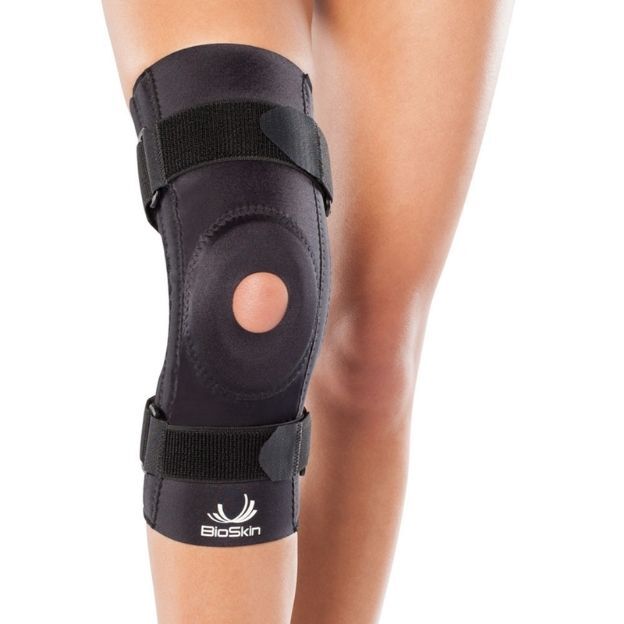
Patella Stabilizer - The Patella Stabilizer is designed for players who want targeted support around the kneecap while maintaining mobility on the court. Its design helps support proper patellar positioning while providing comfortable compression during activity.
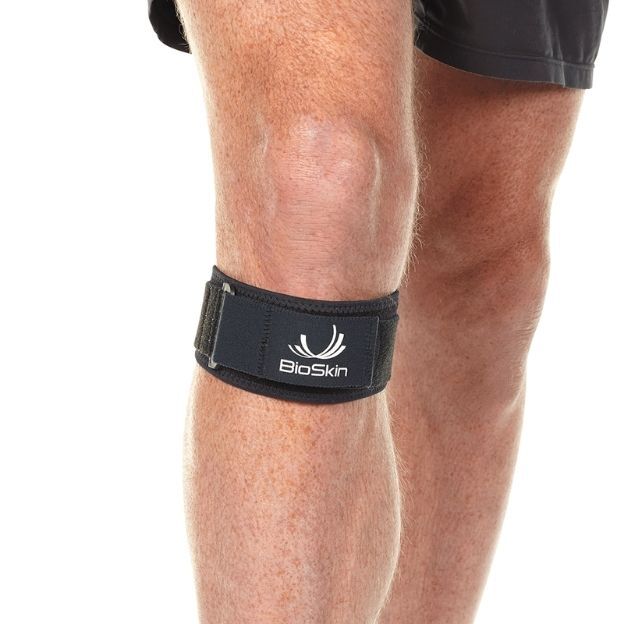
Q Baby with Patella Tendon Straps - For players who experience discomfort below the kneecap, the Q Baby with Patella Tendon Strap provides focused support to the patellar tendon. The low-profile design fits comfortably during activity and can be a good option for players who frequently lunge, squat, or make quick directional changes.
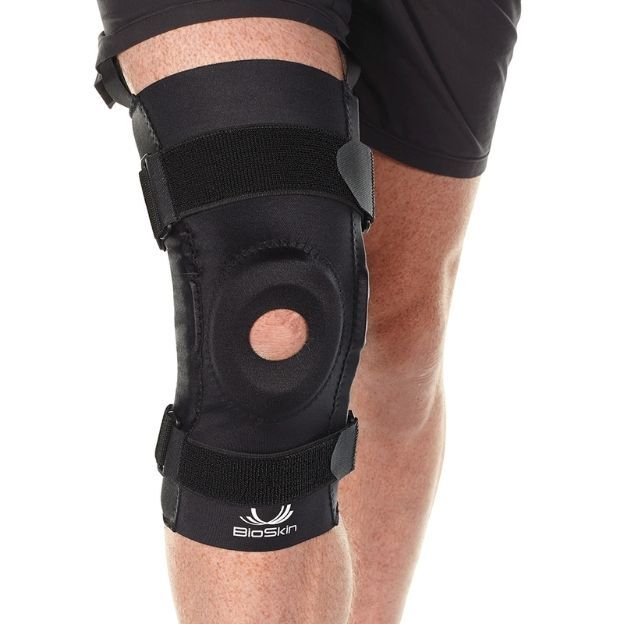
Hinged Knee Sleeve - Players looking for more substantial knee support may prefer a Hinged Knee Sleeve. Available in both Pull-On and Wraparound styles, these braces provide additional stability while still allowing functional movement during pickleball play.
Ankle Braces for Pickleball
The ankle plays a major role in nearly every movement on the pickleball court. Whether you're moving laterally to return a wide shot, stepping forward into the kitchen, or quickly changing direction during a rally, the ankle helps provide balance, stability, and control.
While pickleball is often considered lower impact than some court sports, the game still involves frequent movements that can challenge the ankle joint. Players with a history of ankle sprains or those returning to activity after an injury often look for additional ankle support during play.
Why ankles take so much stress
Pickleball rallies may take place on a relatively small court, but they often require fast reactions and repeated movement in multiple directions.
Side-to-side movement. Lateral movement is a constant part of pickleball. Shuffling along the kitchen line, covering wide shots, and recovering position after a return all place demands on the ankles and the structures that help stabilize the joint.
Sudden changes of direction. Many points involve quick starts, stops, and directional changes. These movements can challenge ankle stability, particularly during competitive play, tournament weekends, or long days on the court.
Types of ankle support
Different ankle supports are designed to provide different levels of support and stability.
- Compression sleeves provide lightweight support and a close-fitting feel while allowing unrestricted movement. Many players choose compression products when they want minimal bulk inside their court shoes.
- Lace-up ankle braces provide a greater level of support than compression sleeves alone. These braces are commonly used by athletes looking for additional stability during activity.
- Stabilizing ankle braces are designed to help control excessive ankle motion while supporting natural movement. They are often used by athletes with a history of ankle sprains or those seeking more substantial support during cutting and pivoting movements.
BioSkin ankle support options
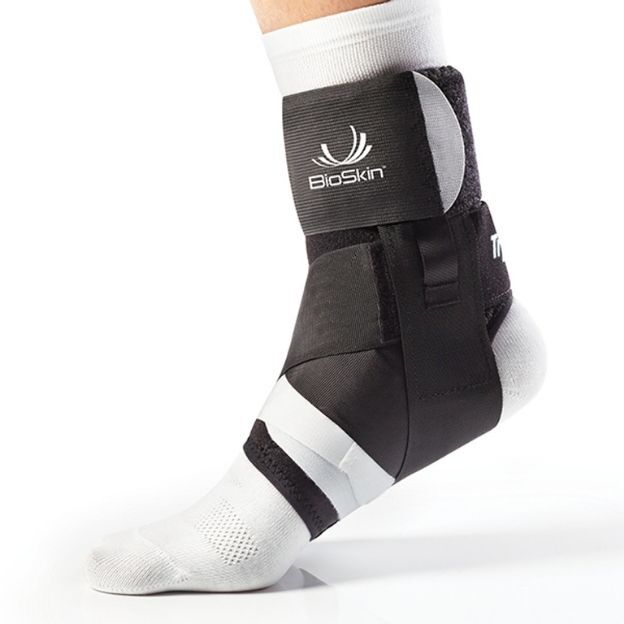
TriLok Ankle Brace - The TriLok Ankle Brace is designed to provide a high level of ankle support while allowing active movement. Its stabilization system helps support the ankle during the side-to-side movement, pivoting, and directional changes that are common in pickleball. Players with a history of ankle sprains or recurring ankle instability often choose this type of support when returning to court activities.
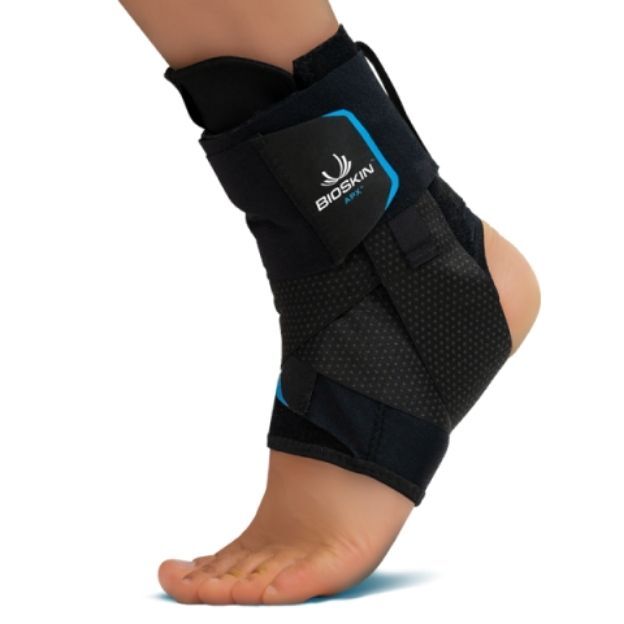
APX Ankle Brace - For players looking for a lower-profile option, the APX Ankle Brace provides ankle support in a lightweight design. It can be a good choice for players who want additional stability during play while maintaining a streamlined fit inside athletic footwear.
Wrist Supports for Pickleball
The wrist plays an important role in every pickleball shot. Serving, dinking, volleys, and groundstrokes all rely on coordinated wrist and forearm movement to help control paddle position and shot placement.
As playing volume increases, some players notice wrist soreness during or after matches. Repetitive gripping, frequent paddle swings, and long sessions on the court can place ongoing demands on the wrist joint and surrounding soft tissues.
Repetitive paddle movements and wrist strain
Unlike occasional recreational play, frequent pickleball sessions can expose the wrist to hundreds of repetitive movements in a single day. Tournament weekends and back-to-back matches may further increase these demands.
Players may notice wrist discomfort during periods of increased activity, after extended play, or while returning to the court following a previous wrist injury.
When a wrist brace may help
A wrist brace may be considered when additional support is needed during recovery from a wrist injury or when limiting wrist motion is recommended.
Common situations include:
- Returning to activity after a wrist injury
- Managing wrist discomfort during daily activities
- Supporting the wrist during recovery periods between matches
- Situations where limiting wrist movement has been recommended by a healthcare professional
Because pickleball relies heavily on wrist mobility and paddle control, more restrictive wrist braces are often used outside of active play rather than during competition.
BioSkin wrist support options
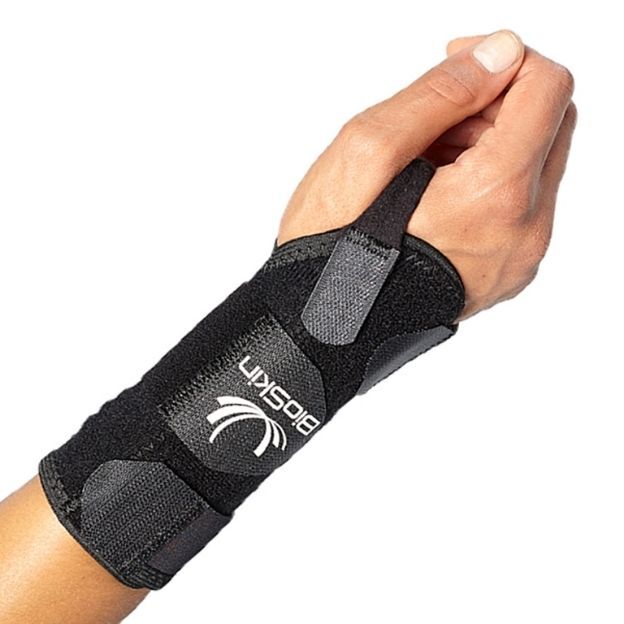
DP2 Cock-Up Wrist Splint - The DP2 Cock-Up Wrist Splint is designed to support the wrist in a functional position while limiting movement. It may be used during recovery periods or daily activities when additional wrist support is desired. Players recovering from a wrist injury may find it useful off the court as part of a broader recovery plan.
As with any brace, proper fit is important. If symptoms persist, worsen, or interfere with play, consult a qualified healthcare professional for evaluation and treatment recommendations.
Elbow Supports for Pickleball Players
Few areas of the body are used as consistently during pickleball as the elbow. Every serve, volley, dink, and groundstroke requires coordinated movement through the forearm and elbow. Over time, repetitive gripping and paddle swings can place stress on the muscles and tendons that help control these movements.
For some players, this repeated demand can lead to elbow irritation, especially during periods of increased play or after long days on the court.
Understanding pickleball elbow
The term "pickleball elbow" is often used to describe discomfort around the outside of the elbow that develops from repetitive gripping and swinging motions. The condition is similar to what is commonly known as tennis elbow.
While a single match is unlikely to cause symptoms on its own, repeated play over weeks or months can increase stress on the tendons that attach to the elbow. Players may notice discomfort during backhand shots, gripping the paddle, lifting objects, or after extended playing sessions.
When to consider additional support
Some players choose to wear an elbow support during activity to provide compression or targeted support around the elbow and forearm.
Additional support may be worth considering if you:
- Experience elbow soreness during or after play
- Have recently increased your playing frequency
- Participate in tournaments or multiple matches in a single day
- Are returning to activity after a previous elbow issue
- Want added support during repetitive paddle use
As with other braces and compression products, elbow supports are designed to provide support during activity and are most effective when used as part of a broader approach that may include proper technique, strength training, mobility work, and appropriate recovery.
BioSkin elbow support options
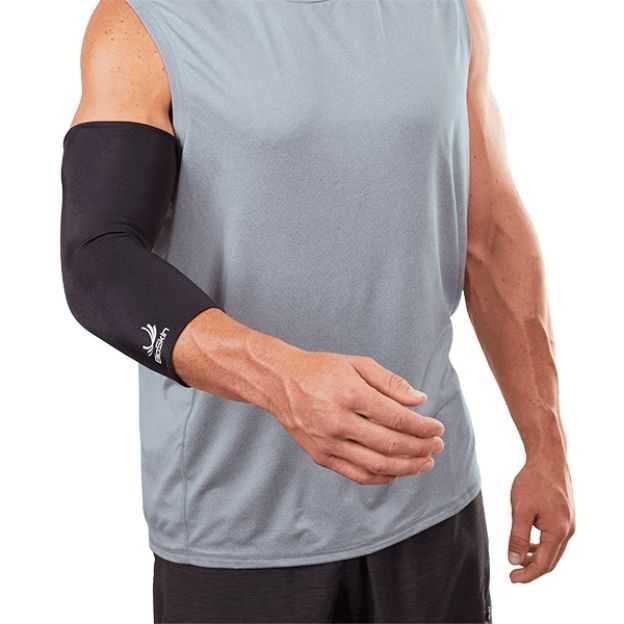
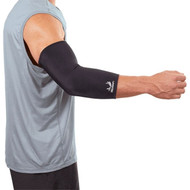
Standard Elbow Sleeve - The Standard Elbow Sleeve provides compression in a lightweight, low-profile design that can be worn during activity. It is designed for players who want comfortable elbow support without significantly restricting movement on the court.
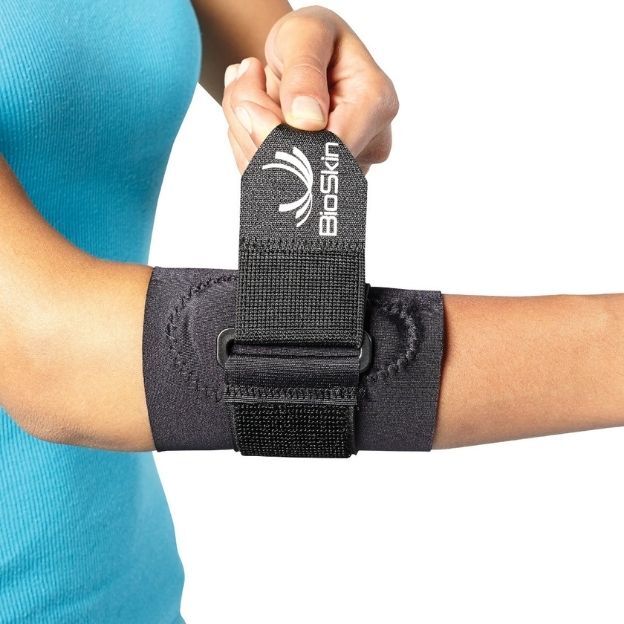
Tennis Elbow Band - The Tennis Elbow Band provides more targeted support than a compression sleeve alone. By applying focused pressure to the forearm muscles and tendons, it is often chosen by players who experience discomfort concentrated around the outside of the elbow during gripping and paddle swings.
How to Choose the Right Pickleball Brace or Support
The best pickleball brace or support depends on where you're experiencing symptoms and the type of support you're looking for. Some players want additional stability during play, while others prefer lightweight compression that fits comfortably under athletic clothing and equipment.
The goal is to match the support to your needs rather than choosing the most rigid brace available.
For knee discomfort
- If your symptoms are centered around the knee, consider where the discomfort occurs and how much support you need.
- If you experience discomfort around the kneecap, a patella-focused brace such as the Patella Stabilizer may be a good fit.
- If symptoms are concentrated below the kneecap near the patellar tendon, a patellar tendon strap may provide more targeted support.
- If you're looking for additional stability during movement or have a history of knee injury, a hinged knee brace may offer a higher level of support.
For ankle instability
Pickleball involves frequent side-to-side movement, quick stops, and rapid changes of direction, all of which place demands on the ankle.
- If you want lightweight support during play, a low-profile ankle brace may be sufficient.
- If you've experienced previous ankle sprains or feel less confident during lateral movement, a stabilizing ankle brace may provide additional support.
Choosing a brace that fits comfortably inside your court shoes is important for both comfort and performance on the court.
For wrist discomfort
The wrist is involved in nearly every shot, from serves and volleys to dinks and groundstrokes.
- If you're recovering from a wrist injury or have been advised to limit wrist motion, a wrist brace may be appropriate during recovery periods.
- For active play, consider how much wrist mobility you need before selecting a more restrictive support.
Because paddle control depends heavily on wrist movement, many players use wrist braces primarily outside of competition and practice sessions.
For elbow irritation
Repetitive gripping and paddle swings can place ongoing demands on the elbow and forearm muscles.
- If you're looking for general compression and support during activity, an elbow sleeve may be a good option.
- If symptoms are concentrated around the outside of the elbow, a more targeted elbow band may be worth considering.
Many players choose elbow support during periods of increased play volume, tournament weekends, or when returning to activity after a previous issue.
For muscle fatigue
Long matches, back-to-back playing days, and tournament schedules can leave the legs feeling tired and overworked.
Compression sleeves and muscle supports are often used by players looking for lightweight support during activity or between matches.
Options may include:
- Calf sleeves for lower-leg support
- Thigh sleeves for quadriceps and hamstring compression
- Compression shorts for support around the hips and upper thighs
Find the Right Support for Your Game
Whether you're dealing with knee discomfort after long matches, looking for additional ankle stability during quick directional changes, or managing the demands of frequent play, the right support can help you stay comfortable and confident on the court.
BioSkin's Pickleball Collection includes braces, compression sleeves, and supports designed for the areas pickleball players rely on most, including the knees, ankles, elbows, wrists, and lower body muscles.
Explore the collection to find support that matches your needs, and be sure to use BioSkin's sizing guidance to help ensure the best fit. With the right combination of support, training, and recovery, you can focus on enjoying the game and staying active on the court.
Frequently Asked Questions
What is the best brace for pickleball?
The best brace depends on the area you're trying to support and your specific needs. Some players prefer ankle braces for added stability during lateral movement, while others use knee braces, elbow supports, or compression sleeves to help manage the physical demands of regular play. Choosing a product designed for the affected area and ensuring proper fit are both important.
Can I wear a brace while playing pickleball?
Many braces and compression supports are designed to be worn during activity. Low-profile options such as ankle braces, knee supports, compression sleeves, and elbow supports can often be worn comfortably during matches and practice sessions. Always follow the manufacturer's instructions and discontinue use if you experience numbness, tingling, or increased discomfort.
Do compression sleeves and braces prevent pickleball injuries?
No brace or compression sleeve can guarantee injury prevention. Support products are designed to provide compression, stability, or targeted support during activity, but they work best as part of a broader approach that includes strength training, mobility work, proper recovery, and gradual progression of activity levels.
What can I do to reduce my risk of common pickleball injuries?
A few simple habits can go a long way. Play at an intensity that matches your current fitness level, especially if you're new to the sport or returning after time away. Take time to learn proper technique, including footwork and paddle mechanics, rather than relying solely on athletic ability.
Wear court shoes with good traction and support, warm up before playing, and gradually increase playing time instead of jumping into long sessions or tournament weekends. Listening to your body and allowing adequate recovery between matches can also help you stay active and comfortable on the court.