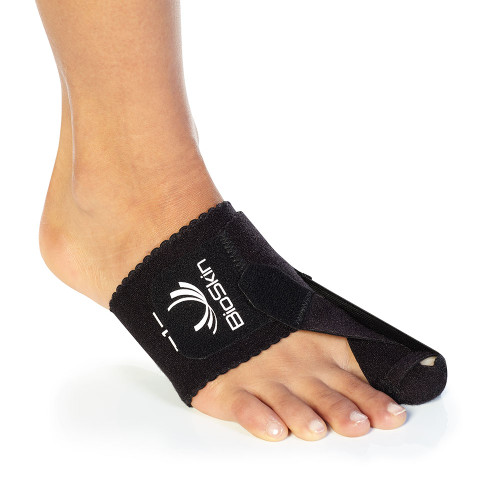


How Do I Choose the Right Support for Hallux Valgus?
Choosing the right support depends on the severity of the bunion deformity, your symptoms, and how much correction or relief you need during daily activity.
Both options are designed to apply gentle corrective tension to the big toe joint (MTP joint) without restricting the rest of the foot.
What causes bunions to develop?
A bunion forms when the big toe gradually shifts toward the second toe, leading to lateral displacement at the joint and a bony prominence at the metatarsal head. This hallux valgus deformity can be influenced by several contributing factors, including foot structure, ligamentous laxity, and inflammatory conditions such as rheumatoid arthritis.
Footwear also plays a role. Tight shoes, narrow toe boxes, and pointed shoes can increase pressure on the big toe joint and worsen alignment over time.
How do bunion supports help?
Bunion supports are designed to guide the big toe into a more correct position and reduce pressure on the joint. They do not reverse a structural deformity but may help relieve pain, reduce irritation, and improve comfort during daily activity
Alignment straps work by applying gentle tension along the big toe, helping reduce strain on surrounding soft tissues such as the adductor hallucis tendon and joint capsule. This may help limit progression in early to moderate cases and make wearing shoes more comfortable.
What else helps manage bunion pain?
Support is most effective when combined with simple footwear and activity changes. Many foot and ankle specialists recommend:
- Wearing properly fitting shoes with a wide or roomy toe box
- Avoiding tight shoes and high-pressure footwear
- Using shoe inserts or padding to reduce friction
- Choosing soft soles to reduce pressure during walking
These adjustments can help reduce painful swelling and improve comfort without surgery.
When is surgery considered?
Surgical intervention may be considered for advanced bunion deformity, persistent pain, or difficulty walking that does not improve with conservative care.
Procedures such as distal osteotomy, proximal osteotomy, or other surgical techniques aim to restore bony alignment and correct the deformity. These are typically recommended after a physical examination and imaging to assess severity.
Frequently Asked Questions
Bunion surgery may be considered when pain becomes persistent, the deformity progresses, or daily activities like walking or wearing shoes become difficult. It is typically recommended only after nonsurgical treatments no longer provide relief.
You should see a foot and ankle specialist if you have ongoing pain, difficulty wearing shoes, or worsening toe deformity. A physical examination can help determine the severity and appropriate treatment options.
Patient education helps individuals understand how bunions develop, what contributes to progression, and how to manage symptoms. This includes choosing proper footwear and using support options to reduce pressure on the joint.
To prevent bunions from worsening, wear properly fitting shoes with a wide toe box, avoid tight or pointed footwear, and reduce pressure on the big toe joint. Early support and footwear changes can help manage symptoms.
Risk factors include foot structure, ligamentous laxity, poorly fitting shoes, and conditions like rheumatoid arthritis. These factors can contribute to joint misalignment and the development of hallux valgus.