An elbow tennis brace, often called a tennis elbow brace or counterforce band, is a support worn around the forearm just below the elbow to apply targeted compression and reduce strain on the irritated tendons involved in tennis elbow. Tennis elbow is a common condition that causes pain on the outside of the elbow, and despite its name, you don't have to play tennis to develop it. Repetitive gripping, lifting, typing, using tools, and other activities that repeatedly stress the forearm can all contribute to it.
Also known as lateral epicondylitis, tennis elbow affects the tendons that connect the muscles of the forearm to the outside of the elbow. It can make everyday tasks such as gripping a coffee cup, turning a doorknob, lifting an object, or playing sports uncomfortable, which is why finding the right support and treatment matters for both daily function and performance. Whether you're dealing with symptoms, play racquet sports, do hands-on work, or use your forearm repetitively, this guide explains what tennis elbow is, what causes it, common symptoms and diagnosis, risk factors, treatment options including a tennis elbow brace, recovery time, prevention, and when to see a doctor.
The good news is that most cases can be managed without surgery. Treatment may include modifying activities, physical therapy, pain management, and supportive options such as a tennis elbow brace or counterforce band.
What is a Tennis Elbow?
Tennis elbow, or lateral epicondylitis, is an overuse condition involving the tendons on the outside of the elbow. These tendons help control movements of the wrist and hand.
Repeated gripping and wrist extension can place stress on the tendon where it attaches near the lateral epicondyle, the bony prominence on the outside of the elbow bone. Over time, repetitive loading can contribute to tendon irritation, pain, and reduced function.
For more information about this condition and other common elbow problems, see BioSkin's Elbow Injury Education Center.
Although tennis players can develop the condition, tennis elbow is not limited to athletes. It can affect people who perform repetitive movements at work, at home, or during exercise.
What Causes Tennis Elbows?
Tennis elbow usually develops from overuse and repetitive activity that repeatedly stresses the forearm muscles and tendons rather than from one specific injury.
Activities that can contribute to tennis elbow include:
- Playing tennis or other racquet sports
- Pickleball and other sports involving repeated gripping
- Weightlifting
- Repetitive lifting or carrying
- Using chain saws
- Painting, plumbing, or construction work
- Repeated twisting of the wrist
- Prolonged computer or mouse use
- Repetitive gripping during household tasks
A sudden increase in activity can also contribute. For example, starting a new workout program, playing more tennis than usual, changing equipment, or performing an unfamiliar repetitive task can put more stress on the forearm than the tendons are prepared to handle.

Tennis Elbow Symptoms
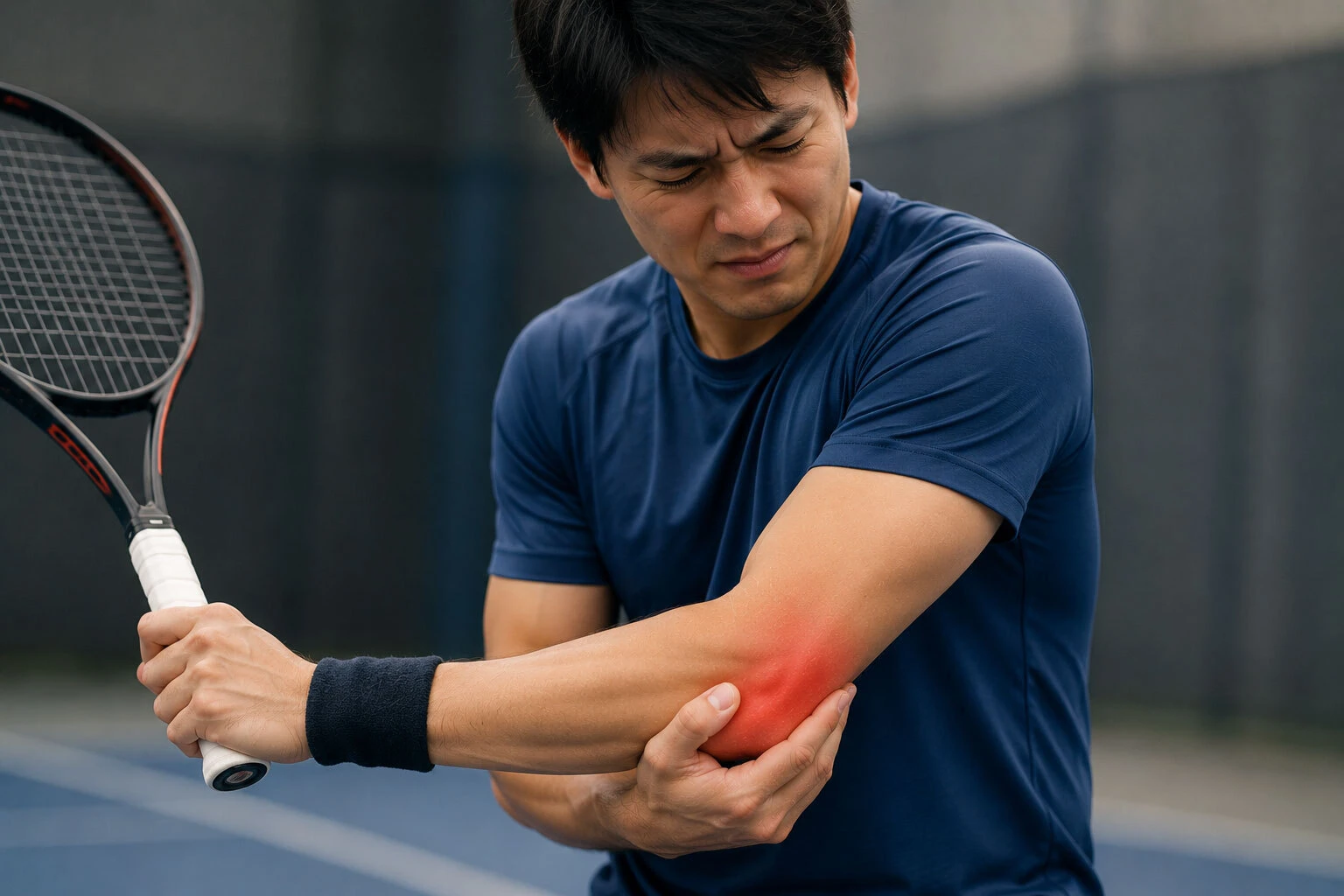
The most common symptom of tennis elbow is tennis elbow pain or tenderness on the outside of the elbow.
You may also experience:
- Pain that extends from the outside of the elbow into the forearm
- Pain when gripping or squeezing objects
- Weakness in the hand or forearm
- Discomfort when lifting or carrying objects
- Pain when twisting the wrist or forearm
- Pain during wrist extension
- Tenderness around the outside of the elbow
- Difficulty performing activities that require repeated gripping
For some people, the pain and soreness start gradually and become more noticeable over time. For others, symptoms may appear after a change in activity or an unusually demanding workout.
Where Does Tennis Elbow Hurt?
Tennis elbow typically causes pain around the outside of the elbow, near the lateral epicondyle.
The discomfort may extend down the outside of the forearm and, in some people, slightly toward the upper arm, becoming more noticeable when you grip something or move your wrist against resistance.
If your pain is primarily on the inside of the elbow, you may have a different condition called golfer's elbow, or medial epicondylitis.
Because several conditions can cause elbow pain, persistent or severe symptoms should be evaluated by a healthcare professional.
Who is at Risk for Tennis Elbow?
Anyone who repeatedly uses the muscles of the forearm can develop tennis elbow.
Risk may be higher for people who:
- Play racquet sports
- Perform repetitive manual work
- Use hand tools frequently
- Lift weights or perform repetitive exercises
- Work at a computer for long periodsm
- Frequently grip, twist, or lift objects
- Recently increased the intensity or frequency of an activity
How is Tennis Elbow Diagnosed?
Tennis elbow is generally diagnosed in patients based on symptoms, medical history, and a physical examination.
A healthcare provider may ask about:
- Where your elbow hurts
- When the pain started
- Activities that make your symptoms worse
- Recent changes in exercise or work
- Your level of pain
- Whether you have weakness or other symptoms
During an examination, a provider may check for tenderness around the outside of the elbow and pain caused by resisted wrist or finger movements. Imaging is not always necessary, but ultrasound, MRI, or other tests may be considered when symptoms persist or another condition needs to be ruled out.
How to Treat Tennis Elbow
Treatment for tennis elbow usually starts with conservative treatments designed to reduce irritation, inflammation, and pain while restoring normal use of the arm.
1. Modify Activities That Cause Pain
Reducing or temporarily modifying activities that aggravate your symptoms can give the affected tendon time to recover, provide the arm with more rest, and may help relieve symptoms.
You may not need to stop all activity. Instead, consider reducing the intensity, frequency, or duration of movements that repeatedly cause pain.
For athletes, this may mean taking a break from certain strokes or reducing training volume, since overuse can affect either arm, including the left arm, depending on the activity. For people who perform repetitive work, adjusting technique, equipment, or workstation setup may help reduce stress on the elbow.
2. Use Ice or Other Pain-Relief Measures
Cold therapy may help temporarily reduce pain after activities that aggravate the elbow.
Over-the-counter medications such as NSAIDs may also be recommended for pain relief in some people. Talk with your healthcare provider or pharmacist about whether these medications are appropriate for you.
3. Physical Therapy and Exercises
Physical therapy can be an important part of recovery.
When symptoms persist, treatment plans are often adjusted for individual patients and used alongside other treatments for tendonitis.
A physical therapist can help you develop a program to improve flexibility, strength, and function in the forearm. Exercises may focus on gradually loading the muscles and tendons involved in wrist and forearm movement.
4. Try a Tennis Elbow Brace or Counterforce Band
A tennis elbow brace, such as a tennis elbow strap or elbow strap, applies pressure to the upper forearm to reduce strain where the tendons attach near the bone on the outside of the elbow during activity.
A counterforce strap is typically worn below the elbow and is often most helpful for sharp pain on the outside of the elbow during swinging or gripping activities. Some people use them during sports, work, exercise, or other activities that aggravate their symptoms.
BioSkin's Tennis Elbow Band uses a silicone pad and additional elastic strap to provide targeted compression just below the elbow. For tennis elbow, the pad is positioned below the elbow to target the injured area where discomfort is felt rather than the joint itself. The low-profile design is intended to allow normal elbow movement while providing localized support. Counterforce braces reduce tendon force by about 13%-15%, which may help relieve pain during activities.
A brace should feel tight but comfortable for a perfect fit and should not cause numbness, tingling, or circulation problems. A brace should complement an overall recovery plan rather than replace professional evaluation or appropriate activity modification, and may improve stability while helping reduce the risk of further injury.
Night splints or wrist braces can also be an effective way to help treat tennis elbow. By keeping the wrist in a neutral position while you sleep, they can reduce strain on the tendons and give your arm a chance to rest and recover.
5. Gradually Return to Activity
As symptoms improve, gradually return to the activities that caused your pain.
Increasing activity too quickly can place additional stress on an irritated tendon. Pay attention to how your elbow responds during and after activity, and work with a healthcare professional if you are unsure how quickly to increase your workload. Some people wear support only during aggravating activity, and a brace at rest is not always necessary for everyone.
For tennis players, reviewing stroke technique, racquet grip, equipment, and training volume may also help reduce unnecessary stress on the forearm.
How Long Does the Tennis Elbow Take to Heal?
Tennis elbow can take time to improve.
Many cases eventually get better with conservative treatment, but recovery is not always quick. Your recovery time can depend on factors such as:
- How long you have had symptoms
- How much the tendon is being stressed
- Whether you can modify the activity causing the pain
- Your overall strength and mobility
- Your response to treatment
- Whether another condition is contributing to the pain
If symptoms are not improving or are interfering with everyday activities, consult a healthcare professional for an individualized treatment plan.

Can You Play Tennis With a Tennis Elbow?
You may be able to remain active while recovering from tennis elbow, but continuing the same activity at the same intensity can make symptoms harder to manage.
If playing tennis causes pain, consider reducing your playing time or intensity while addressing the factors contributing to the problem.
A tennis elbow support may provide targeted support during sports and daily tasks, but it should not be used to push through significant pain.
Once symptoms improve, gradually increase your activity while paying attention to your technique, equipment, grip, and training volume.
How Long Does the Tennis Elbow Take to Heal?
Tennis elbow can take time to improve.
Many cases eventually get better with conservative treatment, but recovery is not always quick. Your recovery time can depend on factors such as:
- How long you have had symptoms
- How much the tendon is being stressed
- Whether you can modify the activity causing the pain
- Your overall strength and mobility
- Your response to treatment
- Whether another condition is contributing to the pain
If symptoms are not improving or are interfering with everyday activities, consult a healthcare professional for an individualized treatment plan.
How to Prevent Tennis Elbow
You cannot prevent every case of tennis elbow, but reducing repetitive stress on the forearm may lower your risk.
Helpful strategies include:
- Increase training volume gradually
- Take breaks during repetitive activities
- Use proper technique during sports
- Make sure equipment fits appropriately
- Avoid sudden increases in workload
- Strengthen the forearm and wrist muscles
- Adjust your workstation if computer use contributes to symptoms
- Use supportive equipment when appropriate
- Give your body adequate recovery time
Tennis Elbow vs. Golfer's Elbow
Tennis elbow and golfer's elbow are similar conditions, but they affect different areas of the elbow.
Tennis elbow is also called lateral epicondylitis and typically causes pain on the outside of the elbow.
Golfer's elbow is also called medial epicondylitis and typically causes pain on the inside of the elbow.
Despite their names, neither condition is limited to the sport associated with it. Both can develop from repetitive activities involving the wrist and forearm.
When Should You See a Doctor for Tennis Elbow?
Patients should seek evaluation from a healthcare professional if:
- This is the first time you have experienced these symptoms
- Pain is severe or getting worse
- Symptoms interfere with everyday activities
- You have significant weakness
- Your symptoms do not improve with activity modification and home care
- You have numbness or tingling
- You experienced a significant injury
- You are unsure whether your symptoms are actually tennis elbow
Numbness or tingling may indicate another condition involving a nerve and should not automatically be attributed to tennis elbow.

Frequently Asked Questions About Tennis Elbow
There is no single treatment that works fastest for everyone. Reducing activities that aggravate the elbow, gradually restoring strength and movement, and using appropriate pain-management and support strategies can help.
A tennis elbow brace or counterforce band may provide targeted support during activity and can be part of a conservative treatment plan. In that role, braces for tennis elbow may help manage lateral epicondylitis, and some patients use them during daily activities or exercise, and may also help prevent symptoms from worsening during aggravating activity.
Counterforce-style tennis elbow braces are generally positioned on the forearm just below the elbow. For the BioSkin Tennis Elbow Band, the silicone pad should be positioned over the outside of the elbow for tennis elbow. A wrist splint is another option in some cases because it limits wrist movement and may ease painful stress on the elbow, especially when wrist motion is a major trigger. Follow the product's application instructions for proper placement.
Yes. Tennis elbow is often self-limited and many people improve with conservative care. However, recovery can take months, so persistent or worsening symptoms should be evaluated by a healthcare professional.
No. Tennis elbow can develop from many repetitive activities involving gripping, lifting, wrist movement, or forearm use. Manual work, exercise, household activities, and computer use can all contribute.
A tennis elbow band typically provides more targeted support around the upper forearm, while a traditional elbow sleeve generally provides broader compression around the elbow. In practice, sleeves are often a better fit for general joint aches or diffuse swelling than a more targeted band. The best option depends on your symptoms, activity, and the type of support you need. Compression sleeves may also help reduce inflammation, support circulation, and provide uniform warmth to the soft tissues around the elbow, and breathable, moisture-wicking materials can help limit sweat-related slippage during extended periods.