Elbow Injuries
ELBOW INJURIES
Elbow injuries are conditions that affect the elbow joint and surrounding tissues, often caused by overuse, repetitive activity, sports, falls, or direct impact, and they commonly lead to pain, swelling, tenderness, and reduced movement. The elbow is a complex joint that connects the upper and lower arm and supports everyday movements such as lifting, gripping, reaching, and bending, so even a mild injury can interfere with work, exercise, and daily tasks.
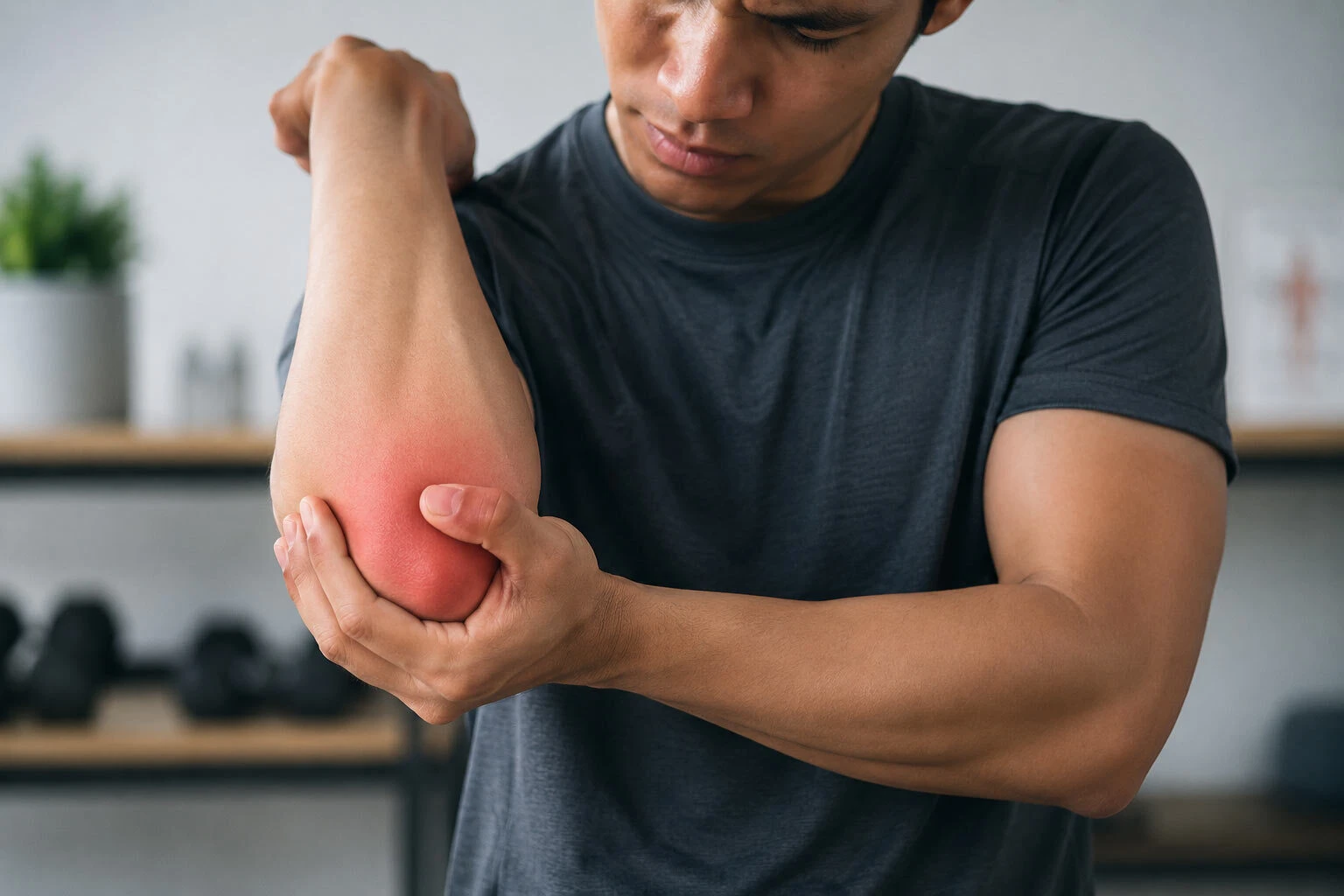
Common problems include overuse injuries such as tennis elbow and golfer's elbow, as well as bursitis, general elbow pain, joint swelling, bruising, and muscle strains. If you're dealing with elbow pain or a recent injury whether you're an athlete, a manual worker, or simply trying to understand what might be causing your symptoms, knowing which type of elbow problem you have is an important first step toward the right treatment and support.
Explore the common elbow injuries below to learn how they are identified, what causes them, the symptoms they can produce, how they are diagnosed, and which treatment options may help recovery.
COMMON ELBOW INJURIES AND CONDITIONS
Golfer's Elbow (Medial Epicondylitis)
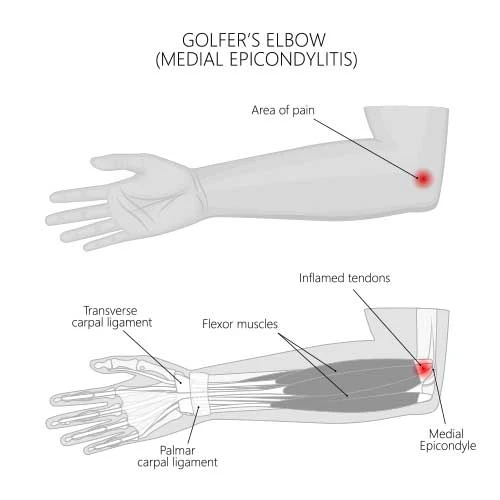
Golfer's elbow, also known as medial epicondylitis, is an overuse condition that causes pain and tenderness on the inside of the elbow.
Despite its name, you don't have to play golf to develop golfer's elbow. Repetitive gripping, wrist movements, lifting, and other activities that place stress on the forearm can contribute to the condition.
Common symptoms include:
- Pain on the inside of the elbow
- Forearm pain or tenderness
- Pain when gripping or lifting
- Weakness in the hand or forearm
- Discomfort during repetitive wrist movements
Learn more about Golfer's Elbow (Medial Epicondylitis), including its causes, symptoms, and treatment options.
General Elbow Pain
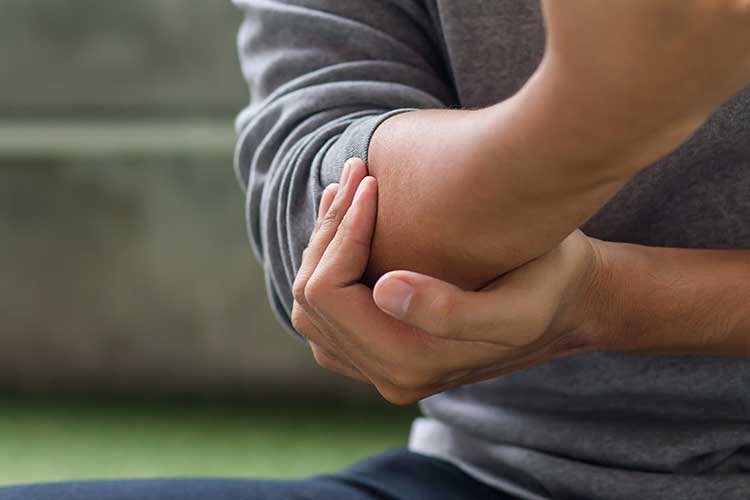
Golfer's elbow pain can have many different causes. Overuse, repetitive movements, falls, direct impacts, inflammation, and injuries involving the muscles, tendons, ligaments, or other structures around the elbow can all contribute to pain.
Elbow pain may occur on the inside or outside of the joint, around the back of the elbow, or throughout the joint. Symptoms can include tenderness, stiffness, swelling, weakness, and pain during movement.
Because elbow pain can have many possible causes, persistent or severe symptoms should be evaluated by a healthcare professional.
Learn more about General Elbow Pain and the possible causes and treatment approaches.
Elbow Bursitis
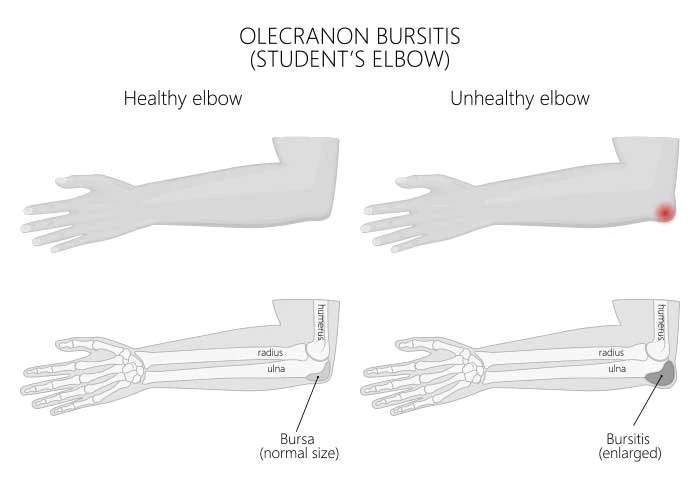
Elbow bursitis occurs when the bursa around the elbow becomes irritated and inflamed. A bursa is a small, fluid-filled sac that helps reduce friction between tissues around a joint.
Elbow bursitis can cause:
- Swelling around the back of the elbow
- Tenderness
- Pain or discomfort
- Redness or warmth in some cases
- Difficulty putting pressure on the elbow
Bursitis can develop after repeated pressure on the elbow, an injury, or other causes of inflammation.
Learn more about Elbow Bursitis, including common causes, symptoms, and treatment options.
Tennis Elbow (Lateral Epicondylitis)
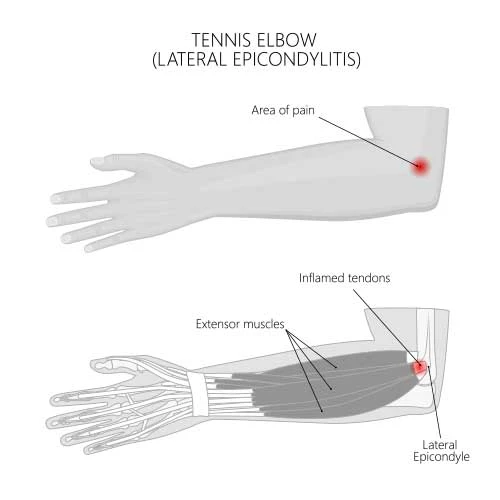
Tennis elbow, also known as lateral epicondylitis, is an overuse condition that causes pain and tenderness on the outside of the elbow.
Despite its name, tennis elbow isn't limited to tennis players. Repetitive gripping, lifting, wrist movements, manual work, weightlifting, pickleball, and other activities can place repeated stress on the forearm and contribute to symptoms.
Common tennis elbow symptoms include:
- Pain on the outside of the elbow
- Forearm pain
- Tenderness around the elbow
- Pain when gripping or squeezing
- Pain when lifting or carrying
- Weakness in the hand or forearm
If you're experiencing these symptoms, learn more about Tennis Elbow (Lateral Epicondylitis), including causes, symptoms, treatment, and recovery.
Elbow Contusion or Joint Swelling
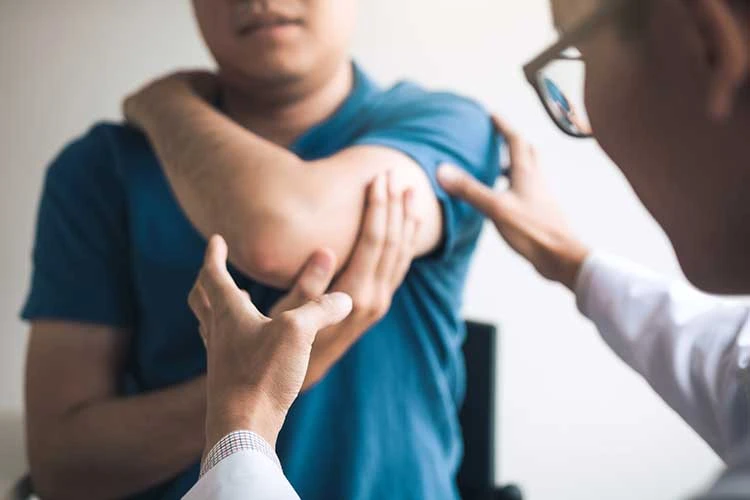
An Elbow bursitis , commonly called a bruised elbow, can occur after a fall or direct impact to the elbow. The surrounding tissues can become irritated, swollen, and discolored following the injury. Trauma can also cause fractures, which are breaks in the bones surrounding the elbow.
An elbow contusion may cause:
- Pain
- Swelling
- Bruising or discoloration
- Tenderness
- Reduced range of motion
- Difficulty bending or straightening the elbow
Bruising or discoloration may be especially noticeable when an elbow fracture is present.
Joint swelling can also occur with other elbow injuries and conditions. The cause of the swelling is important when determining the appropriate treatment.
Learn more about Elbow Contusion or Joint Swelling and what may cause swelling, pain, and reduced movement around the elbow.
Biceps and Triceps Strains
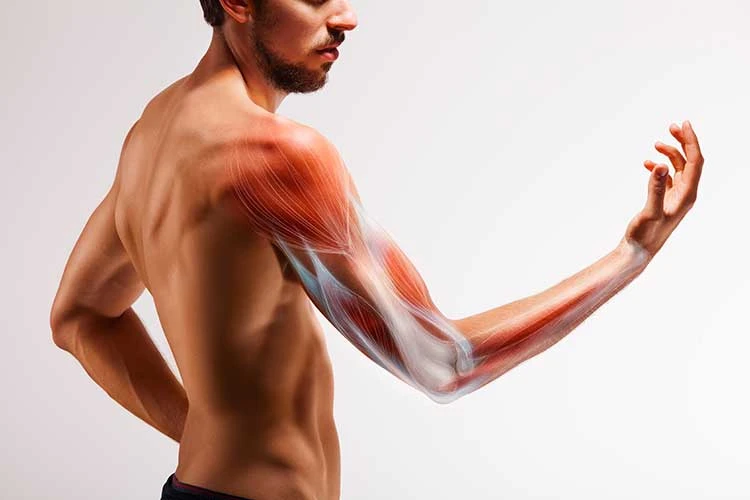
The biceps and triceps are major muscles that help control movement of the arm and elbow. A strain occurs when a muscle or tendon is overstretched or damaged.
Biceps and triceps strains can happen during sports, weightlifting, repetitive work, or sudden movements.
Symptoms may include:
- Localized pain
- Tenderness
- Swelling
- Bruising
- Muscle weakness
- Pain during arm movement
The severity of a strain can vary from a mild injury to a more significant muscle or tendon injury.
Learn more about Biceps and Triceps Strains, including common causes, symptoms, and treatment considerations.
Understanding Elbow Injuries
Elbow injuries can generally be associated with overuse, repetitive activity, direct impact, or sudden strain.
Some conditions develop gradually. Tennis elbow and golfer's elbow, for example, are commonly associated with repetitive use of the forearm. Other injuries, such as an elbow contusion, may occur after a fall or direct impact.
Common symptoms of elbow injuries include:
- Elbow pain
- Swelling
- Tenderness
- Stiffness
- Weakness
- Bruising
- Reduced range of motion
- Pain during gripping or lifting
Because several conditions can produce similar symptoms, identifying the location and nature of your pain can help determine what type of elbow problem you may be experiencing.

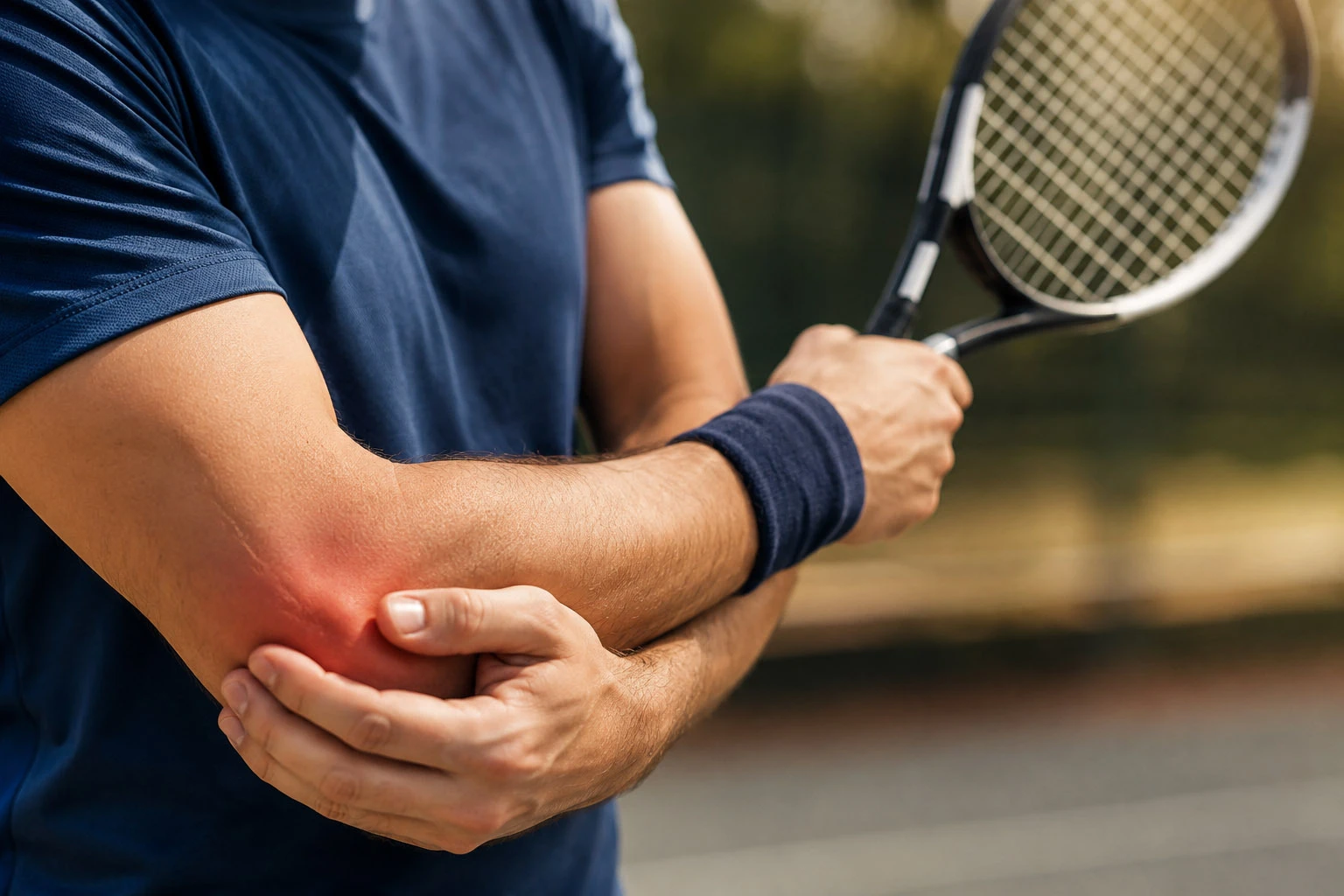
Overuse Elbow Injuries
Overuse is a common factor in several elbow conditions.
Activities involving repeated gripping, wrist movement, lifting, or throwing can place stress on the muscles and tendons around the elbow. This kind of repetitive motion, especially with poor biomechanics or technique, can place unnatural loads on the elbow joint. Increasing the intensity or frequency of an activity too quickly can create sudden training spikes that overwhelm connective tissues and lead to tendonitis or other injuries.
Tennis elbow and golfer's elbow are two common examples of elbow conditions associated with repetitive activity.
If you regularly participate in sports, exercise, or physically demanding work, a proper warm-up with dynamic movements, using appropriate equipment, building enough strength and flexibility, and gradually increasing activity with adequate recovery time may help reduce pain and lower injury risk.
Elbow Injuries From Falls and Impact
Not every elbow injury develops from overuse.
A fall or direct impact can cause an elbow contusion, swelling, or other injury. Depending on the severity of the impact, symptoms may include pain, bruising, swelling, and difficulty moving the elbow.
A significant injury should be evaluated by a healthcare professional, particularly if you experience severe pain, significant swelling, deformity, or difficulty moving the arm, because these signs can occur with elbow fractures or elbow dislocations, and significant falls or impacts should be examined to rule out fractures or dislocations when pain, swelling, or loss of movement is substantial.
How Are Elbow Injuries Diagnosed?
The appropriate diagnosis depends on the type of elbow injury and your symptoms.
A healthcare professional may ask about:
- How the injury occurred
- When your symptoms started
- Where you feel pain
- Which movements make symptoms worse
- Whether you have swelling or bruising
- Whether you have weakness or numbness
- Whether you've recently changed your activity level
A physical examination may be used to assess movement, strength, tenderness, swelling, and other symptoms.
Depending on the injury, additional testing such as an X-ray, ultrasound, or MRI may be recommended.
How Are Elbow Injuries Treated?
Treatment depends on the specific injury, its severity, and the underlying cause.
Conservative treatment may include:
- Modifying activities that aggravate symptoms
- Rest and appropriate recovery
- Ice or other pain-management strategies
- Physical therapy
- Stretching and strengthening exercises
- Compression
- Supportive braces or sleeves
- Gradual return to activity
More serious injuries may require additional medical treatment.
For conditions such as tennis elbow and golfer's elbow, targeted support may be used as part of a broader treatment and recovery plan.
When Should You See a Doctor for Elbow Pain?
Not every case of elbow pain requires immediate medical attention, but you should consider professional evaluation if:
- Pain is severe
- Symptoms are getting worse
- You cannot move the elbow normally
- You have significant swelling
- The elbow looks deformed or sits in an abnormal position
- You have substantial weakness
- You experience numbness or tingling
- Symptoms started after a significant injury, especially an acute injury from a fall or direct blow
- Pain does not improve with conservative care
Symptoms that suggest elbow fractures or elbow dislocations should prompt you to seek medical attention promptly.
A healthcare professional can help determine the cause of your symptoms and recommend an appropriate treatment plan.

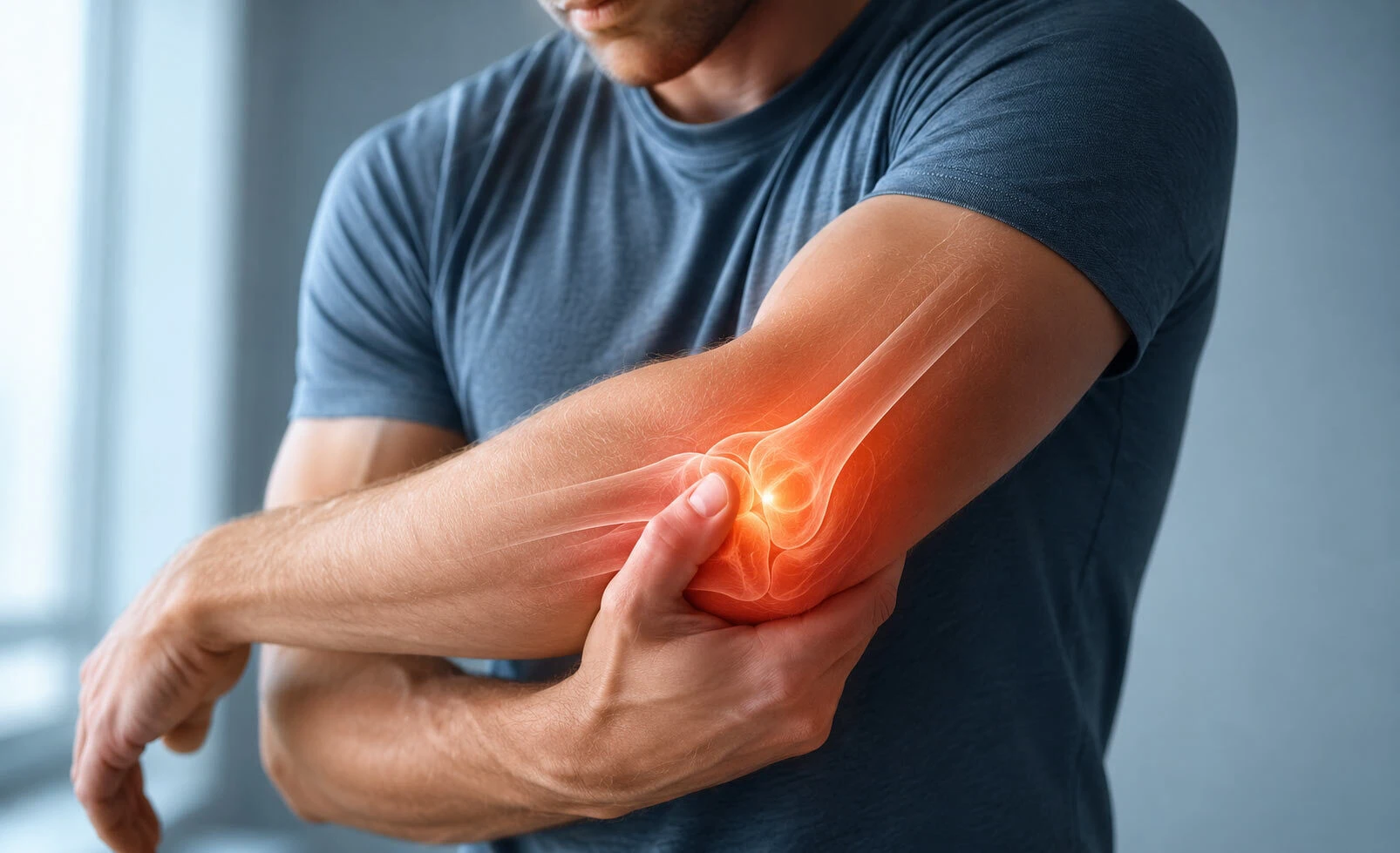
Find the Right Elbow Injury Information
Elbow pain can have many causes, and understanding the difference between common elbow injuries can help you determine what information to explore next.
Whether you're dealing with tennis elbow, golfer's elbow, general elbow pain, elbow bursitis, joint swelling, or a muscle strain, BioSkin provides educational resources to help you understand common symptoms, causes, and treatment options.
Explore the condition that best matches your symptoms:
Expert Advice
Tennis Elbow (Lateral Epicondylitis)

Although it is referred to as Tennis Elbow, the injury is not limited to athletes and can occur from repetitive motions in the workplace or home.
Read MoreElbow Contusion or Joint Swelling
An elbow contusion is more commonly referred to as a bruised elbow. It occurs after a fall or force applied directly to the elbow.
Read MoreElbow Bursitis

Strains of the biceps or triceps cause inflammation which may lead to pain, swelling, and possible bruising at the site of injury.
Read More