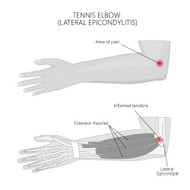
Tennis elbow is a common condition that causes pain and tenderness on the outside of the elbow. Despite its name, you don't have to play tennis to develop it. Repetitive gripping, lifting, wrist movements, and other activities that place stress on the forearm can contribute to tennis elbow.
Also known as lateral epicondylitis, tennis elbow affects the tendons that connect the muscles of the forearm to the outside of the elbow. It can make everyday activities such as gripping an object, opening a jar, turning a doorknob, or lifting something uncomfortable.
If you're looking for tennis elbow treatment, understanding the causes and symptoms of the condition can help you determine the appropriate next steps. Treatment for tennis elbow may include activity modification, exercises, physical therapy, pain management, and supportive options.
What Is Tennis Elbow?
Tennis elbow is an overuse condition that affects the tendons on the outside of the elbow. These tendons connect the forearm muscles to the elbow and help control movements of the wrist and hand.
Repeated gripping, lifting, or wrist extension can place stress on these tendons. Over time, repetitive activity can contribute to pain and tenderness around the outside of the elbow.
The medical term for tennis elbow is lateral epicondylitis. The condition is commonly associated with tennis, but athletes are not the only people who develop it.
People who perform repetitive work, use hand tools, lift weights, play other sports, or regularly perform activities involving the wrist and forearm can also experience tennis elbow.
Tennis elbow is one of several conditions that can affect the elbow. You can learn more about other common conditions in BioSkin's elbow injuries resource.
What Causes Tennis Elbow?
Tennis elbow usually develops from repetitive stress on the muscles and tendons of the forearm.
Some common activities and occupations that act as risk factors for tennis elbow include:
- Playing tennis or other racquet sports
- Playing pickleball
- Weightlifting
- Repetitive gripping
- Repeated lifting or carrying
- Using hand tools
- Work as painters
- Work as plumbers and in construction
- Repetitive wrist movements
- Typing or using a computer mouse
- Household activities that require frequent gripping
Poor wrist position during work or sport can also increase the risk.
A sudden increase in activity can also contribute to tennis elbow. For example, playing more tennis than usual, starting a new exercise program, increasing your training intensity, or taking on a physically demanding task can place more stress on the forearm than it is accustomed to handling.
In some cases, there may not be one specific activity responsible for the condition. Tennis elbow can develop gradually as the demands placed on the forearm increase over time. Most affected adults are between 30 and 50 years old.
Tennis Elbow Symptoms
The most common symptom of tennis elbow is pain on the outside of the elbow.
Other tennis elbow symptoms may include:
- Tenderness around the outside of the elbow
- Pain that extends into the forearm
- Pain when gripping or squeezing objects
- Pain when lifting or carrying
- Pain when twisting the wrist or forearm
- Weakness in the hand or forearm
- Discomfort during repetitive wrist movements
- Stiffness around the elbow
Tennis elbow symptoms often develop gradually rather than following one specific injury.
You may initially notice mild soreness after an activity involving repetitive gripping or wrist movement. As symptoms progress, pain may become more noticeable during everyday activities.
What Does Tennis Elbow Feel Like?
Tennis elbow commonly feels like a dull ache or tenderness around the outside of the elbow. Some people experience sharper pain when gripping, lifting, or moving the wrist.
The pain may extend down the outside of the forearm. Activities that require the forearm muscles to work against resistance can make symptoms worse.
For example, you may notice pain when:
- Shaking hands
- Opening a jar
- Turning a doorknob
- Holding a cup
- Carrying groceries
- Using a screwdriver
- Lifting weights
- Playing tennis
If your pain is severe, persistent, or accompanied by other symptoms such as numbness or tingling, consult a healthcare professional for an evaluation.
Where Does Tennis Elbow Hurt?
Tennis elbow typically causes pain on the outer part of the elbow, near the bony prominence known as the lateral epicondyle, where the irritated tendons attach to the upper arm bone.
The pain can extend down the forearm and may become worse when you grip an object or move your wrist.
Pain on the inside of the elbow may indicate a different condition, such as golfer's elbow.
Tennis elbow and golfer's elbow can have similar symptoms, but they generally affect opposite sides of the elbow. If you're experiencing pain on the inside of your elbow, learn more about golfer's elbow causes, symptoms, and treatment.
Who Gets Tennis Elbow?
Anyone who repeatedly uses the muscles of the forearm can develop tennis elbow. The dominant arm is often affected because it is used more for gripping and lifting tasks.
The condition is commonly associated with activities involving repetitive gripping, lifting, twisting, or wrist movement.
People who may experience tennis elbow include:
- Tennis players
- Pickleball players
- Other racquet-sport athletes
- Weightlifters
- Manual workers
- Construction workers
- Tradespeople
- People who frequently use hand tools
- People who perform repetitive computer work
You may also be more likely to experience tennis elbow after suddenly increasing the frequency or intensity of an activity.
Tennis Elbow in Tennis Players
Tennis players can develop tennis elbow because the sport involves repeated gripping, swinging, and wrist and forearm movements.
Changes in playing frequency, training volume, technique, or equipment are important risk factors and may increase the amount of stress placed on the forearm. Repetitive movements and poor wrist position during strokes can also increase stress on the elbow.
If playing tennis causes elbow pain, reducing your playing intensity or frequency may help. Reviewing your technique and equipment with a qualified professional may also help identify factors that could be contributing to excessive stress.
However, tennis isn't the only cause of tennis elbow. The condition can develop from many activities that repeatedly load the forearm.
Tennis Elbow in Pickleball Players
Pickleball also involves repetitive gripping, swinging, and wrist movements, which can place stress on the muscles and tendons around the elbow.
If you recently started playing pickleball more frequently or increased the length or intensity of your games, this change in activity could contribute to elbow discomfort.
Pain on the outside of the elbow may be consistent with tennis elbow, but other conditions can cause similar symptoms. Persistent pain should be evaluated by a healthcare professional.
How Is Tennis Elbow Diagnosed?
Tennis elbow is generally diagnosed based on your symptoms, medical history, and a physical examination.
A healthcare professional may ask:
- Where does your elbow hurt?
- When did the pain begin?
- Which activities make your symptoms worse?
- Have you recently changed your exercise or work routine?
- Do you have weakness in your hand or forearm?
- Have you experienced an injury?
During an examination, the provider may check for tenderness around the outside of the elbow and assess how your elbow, wrist, and fingers respond to different movements.
Imaging may also be used to rule out other causes, such as nerve compression.
Imaging is not always necessary. Depending on your symptoms, a healthcare professional may recommend imaging or other tests, including magnetic resonance imaging, to rule out other causes of elbow pain.
Tennis Elbow Treatment
There is no single treatment that works for everyone with tennis elbow. The appropriate approach depends on your symptoms, activity level, and how long you've been experiencing pain.
Most people begin with conservative treatments and nonsurgical treatment options designed to reduce irritation, manage symptoms, and gradually restore normal strength and movement. Treatment commonly starts with rest, ice therapy, and pain relievers to relieve pain.
Most people respond well to these treatments, with about 80 to 95 percent improving without surgery.
1. Modify Activities That Cause Pain
One of the first steps in tennis elbow treatment is identifying and modifying activities that make your symptoms worse.
You may not need to stop all physical activity. Instead, consider reducing the intensity, frequency, or duration of repetitive movements that cause pain.
For example, a tennis player may temporarily reduce playing time, while someone who performs repetitive manual work may need to adjust their technique or take more frequent breaks.
The goal is to reduce unnecessary stress on the elbow while maintaining appropriate movement and activity, which can also help prevent further injury.
2. Ice and Pain-Relief Measures
Cold therapy may provide temporary relief after activities that aggravate the elbow, so apply ice afterward.
Some people may also use over-the-counter anti-inflammatory medications for symptom relief. Talk with your healthcare provider or pharmacist about whether these medications are appropriate for you, particularly if you take other medications or have existing health conditions, and prescription anti-inflammatory medications may be considered in some cases.
These measures can help reduce pain, but they should be considered just one part of an overall treatment approach rather than the only solution.
3. Physical Therapy and Exercises
Physical therapy can be an important part of tennis elbow treatment.
A physical therapist can develop an exercise program based on your symptoms and activity level. The program may include specific exercises for strength, flexibility, and recovery. Physical therapy can improve blood flow to injured tendons and forearm muscles to promote healing.
Strengthening exercises are generally introduced gradually. Eccentric exercises are commonly used to strengthen the forearm. Stretching the wrist flexors and extensors helps maintain flexibility. Returning to demanding activity too quickly may aggravate symptoms.
A healthcare professional or physical therapist can help determine which exercises are appropriate for your condition.
4. Tennis Elbow Support
A brace or compression sleeve can be another option for managing tennis elbow during activities.
A counterforce-style support is worn around the forearm below the elbow and can help reduce stress on the injured tendons and may relieve symptoms during activity. Compression sleeves may improve blood flow and reduce inflammation in the affected area. Some people use this type of support while working, exercising, or participating in sports.
BioSkin offers a dedicated Tennis Elbow support designed for people experiencing symptoms associated with tennis elbow.
Support should complement an overall treatment plan. A brace is a temporary aid and should not replace other treatments or be used to ignore significant or worsening pain.
5. Gradually Return to Activity
As your symptoms improve, gradually return to activities that previously caused pain.
Increasing activity too quickly can place additional stress on the elbow. A gradual return allows you to monitor how your elbow responds to increased activity.
If tennis, pickleball, work, or exercise contributed to your symptoms, consider reviewing your technique, equipment, workload, and training schedule before returning to your previous activity level.
How Long Does Tennis Elbow Take to Heal?
Tennis elbow can take time to improve.
Some people experience improvement within a few weeks or months, while others may have symptoms for much longer. Recovery can depend on the severity and duration of your symptoms, the amount of stress placed on the elbow, and how your body responds to treatment.
Factors that can affect recovery include:
- How long you've had symptoms
- How frequently you perform aggravating activities
- Whether you can modify those activities
- Your strength and mobility
- Your response to treatment
- Whether another condition is contributing to your pain
If your symptoms aren't improving or are interfering with your normal activities, speak with a healthcare professional.
Can Tennis Elbow Heal on Its Own?
Tennis elbow can improve over time, and many people recover with conservative treatment.
However, that doesn't necessarily mean you should continue activities that consistently make your symptoms worse.
Reducing aggravating activities, gradually strengthening the forearm, and addressing factors that may have contributed to the condition can help you manage symptoms while returning to normal activity.
If symptoms persist or become worse, professional evaluation can help determine whether additional treatment is needed.
Can You Play Tennis With Tennis Elbow?
You may be able to remain active while recovering from tennis elbow, but playing through significant pain can make symptoms more difficult to manage.
If tennis aggravates your elbow, consider temporarily reducing your playing time or intensity.
You may also want to review:
- Tennis technique
- Racquet grip
- Racquet specifications
- Training volume
- Frequency of play
- Warm-up and recovery
- Forearm strength
A tennis elbow support may provide additional support during activity, but it should not be considered a way to push through significant pain.
Tennis Elbow vs. Golfer's Elbow
Tennis elbow and golfer's elbow are similar conditions, but they generally affect different areas of the elbow.
Tennis elbow, also known as lateral epicondylitis, typically causes pain on the outside of the elbow.
Golfer's elbow, also known as medial epicondylitis, typically causes pain on the inside of the elbow.
Despite their names, you don't have to play tennis to develop tennis elbow or play golf to develop golfer's elbow. Both conditions can be associated with repetitive gripping and forearm activity.
For a deeper look at the other condition, read BioSkin's golfer's elbow causes, symptoms, and treatment guide.
How to Prevent Tennis Elbow
You can't prevent every case of tennis elbow, but you can take steps to reduce unnecessary stress on the forearm.
Consider:
- Increase activity gradually
- Take breaks during repetitive activities
- Use proper technique during sports
- Make sure sports equipment fits appropriately
- Avoid sudden increases in training volume
- Strengthen your forearm and wrist
- Adjust your work setup when appropriate
- Give your body enough recovery time
For athletes, reviewing technique and equipment can be especially helpful when returning to activity after experiencing elbow pain.
When Should You See a Doctor for Tennis Elbow?
Consider seeing a healthcare professional if:
- You have severe pain
- Symptoms are getting worse
- Pain interferes with everyday activities
- You have significant weakness
- Symptoms don't improve with conservative care
- You experience numbness or tingling
- Your pain began after a significant injury
- You're unsure what is causing your elbow pain
Several conditions can cause pain around the elbow, so persistent symptoms should not automatically be assumed to be tennis elbow.
A healthcare professional can evaluate your symptoms, assess whether another problem is causing elbow pain, and determine the appropriate diagnosis and treatment.
Frequently Asked Questions About Tennis Elbow
What is tennis elbow?
Tennis elbow is a painful condition affecting the tendons on the outside of the elbow. It is also known as lateral epicondylitis.
What causes tennis elbow?
Tennis elbow can develop from repeated or increased use of the forearm muscles and tendons. Tennis, pickleball, weightlifting, manual work, repetitive gripping, and other activities can contribute.
What is the best treatment for tennis elbow?
There isn't one treatment that is best for everyone. Tennis elbow treatment may include activity modification, exercises, physical therapy, pain management, supportive options, and, when symptoms persist, corticosteroid injections, which may provide short-term pain relief, or platelet-rich plasma therapy, which uses a blood sample from your own blood to concentrate growth factors, though healing results are mixed. A healthcare professional can help determine the appropriate approach based on your symptoms.
How do you treat tennis elbow?
Treatment for tennis elbow commonly begins with reducing activities that aggravate symptoms. Physical therapy, strengthening exercises, pain-management strategies, and supportive equipment may also be used.
What is tennis arm treatment?
The phrase tennis arm treatment can refer to treatment for pain and overuse affecting the arm, forearm, or elbow associated with tennis. If the pain is on the outside of the elbow, tennis elbow may be one possible cause. Treatment may include activity modification, exercises, physical therapy, and supportive equipment.
Does a tennis elbow support help?
A tennis elbow support can provide targeted compression around the forearm during activity. BioSkin's Tennis Elbow support is designed specifically for people experiencing tennis elbow symptoms.
Can tennis elbow go away on its own?
Yes, tennis elbow can improve over time. However, recovery may take weeks or months, and persistent symptoms should be evaluated by a healthcare professional.
Can you get tennis elbow without playing tennis?
Yes. Despite its name, tennis elbow can develop from many repetitive activities involving gripping, lifting, wrist movement, and forearm use.
Is tennis elbow the same as lateral epicondylitis?
Tennis elbow is commonly referred to as lateral epicondylitis. The condition affects the tendons around the outside of the elbow and is often associated with repetitive forearm activity.
Takeaway
Tennis elbow is a common cause of pain on the outside of the elbow. Although it is associated with tennis, the condition can affect anyone who repeatedly uses the muscles and tendons of the forearm.
Understanding what causes tennis elbow, recognizing the symptoms, and addressing activities that aggravate the condition are important steps in managing it.
Tennis elbow treatment may include activity modification, physical therapy, exercises, pain-management strategies, and supportive options such as a tennis elbow support; if symptoms persist despite other treatments, some people may consider arthroscopic surgery, which uses small incisions for repair, or open surgery.
If your symptoms are severe, persistent, or interfering with everyday activities, talk with a healthcare professional for an appropriate diagnosis and treatment plan.
For more information about conditions affecting the elbow, explore BioSkin's elbow injuries resource.