




-
Popular


-


-


-


-


-


-


-


-


-

-

-


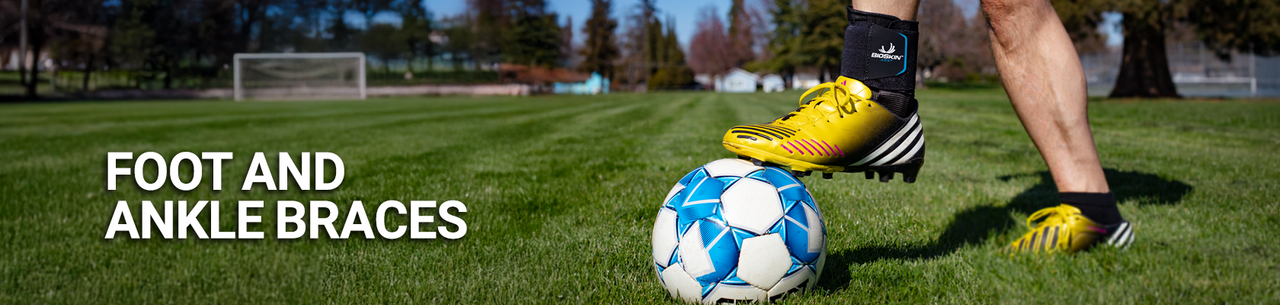
Foot and Ankle Braces
BioSkin ankle braces offer different levels of support for sprains, instability, plantar fasciitis, and everyday ankle soreness. For advanced stability and anti-rolling support, the TriLok Ankle Brace and APX Ankle Braces feature multi-strap designs that help resist inversion. For swelling control and mild sprains, the AFTR series or an ankle compression sleeve with Figure-8 wrap provide targeted compression. Consult a healthcare professional for severe injuries.
How Do I Choose the Right BioSkin Ankle Brace?
Choosing the right ankle brace depends on your injury severity, stability needs, and activity level. The table below compares common conditions with the appropriate level of support and BioSkin solution.
Start by identifying the condition or type of pain you're managing:
- Achilles Tendinitis: Look for braces that reduce strain on the Achilles and support proper heel alignment.
- Ankle Osteoarthritis: Choose low-profile braces that stabilize the joint without restricting mobility.
- Ankle Sprains: Use moderate to maximum support braces like the TriLok or APX to help control inversion and promote stability.
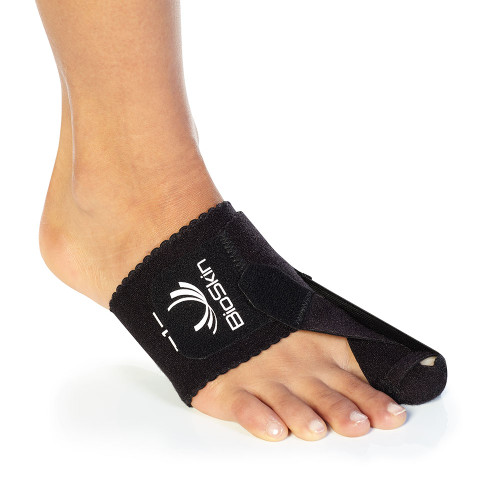
- Bunion / Hallux Valgus: Braces designed for forefoot offloading can reduce irritation around the joint.
- Hammer Toe / Floating Toe: Choose support that relieves toe pressure and allows space inside footwear.
- Peroneal Tendon Strains and Tears: Opt for lateral support braces to reduce excessive movement along the outside of the foot.
- Plantar Fasciitis: Consider the TriLok or APX with plantar support straps to ease arch stress.
- Post-op Pain & Swelling: Compression sleeves or the AFTR series can help manage inflammation and healing.
- PTTD / Post-tib tendonitis: Supportive medial strap systems like those on the TriLok or APX are recommended.
This structured approach helps match support level to real-world needs, whether you're managing swelling, recovering from a sprain, or returning to sport.
Still unsure which support level you need?
If your ankle feels unstable during cutting, jumping, or uneven terrain, a strap-stabilized ankle brace may provide more confidence than a compression sleeve alone. If your primary concern is swelling or mild soreness without frequent rolling, a compression sleeve may be sufficient.
When in doubt, choose support based on activity level. Higher-impact movement typically requires more structured stabilization, while daily wear or light activity may only require compression. If symptoms persist or worsen, consult a healthcare professional before increasing activity.
Which BioSkin ankle brace is best for sprains?
For ankle sprains, especially moderate to severe sprains or recurring instability, the TriLok Ankle Brace is designed as a strap-stabilized ankle brace that provides higher-level support. Its three-point strapping system helps stabilize both the lateral and medial sides of the ankle, which are commonly involved in sprain injuries. This design aims to reduce excessive motion while still allowing functional movement during recovery.
Which ankle brace is best for return to sport?
For return-to-sport support, stability, fit, movement control, and adjustability are key considerations. The TriLok Ankle Brace provides multi-directional stabilization in a relatively low-profile design that fits inside most athletic footwear. One of its biggest advantages is its versatility. The brace can be scaled up or down to support an injury based on the combination of straps you apply or remove, and you can also adjust the level of support provided by the FootLok strap.
For athletes transitioning from early recovery or those needing moderate support, the AFTR Ankle Brace offers compression with added stabilization features that may be appropriate depending on activity level.
What’s the difference between a compression sleeve and a brace?
A compression sleeve provides graduated compression to help manage swelling, circulation, and mild soreness. It does not significantly restrict ankle movement and is typically used for light support or recovery.
A strap-stabilized ankle brace or structured brace includes straps or reinforced elements designed to limit excessive motion and provide added ankle stability, particularly for sprains or return-to-sport support.
Ankle Braces Frequently Asked Questions
An ankle brace is typically worn during activity, rehabilitation, or when additional support is needed for instability. The length of use depends on the severity of the injury and your recovery progress. If you experience ongoing pain, swelling, or have circulation conditions, consult a healthcare professional before extended wear.
Yes. BioSkin compression materials are latex-free and designed for breathability during extended use. The materials are engineered to provide compression and support without natural rubber latex, which may be important for individuals with sensitivities.
Yes. Ankle braces should be machine-washed cold on a gentle cycle and laid flat to dry. Avoid high heat, bleach, or machine drying, as heat can affect elasticity and compression performance over time.
An ankle brace is designed to provide stability and help limit excessive ankle motion during activity. While it may support the ankle and reduce strain, it does not replace strengthening exercises, balance training, or appropriate rehabilitation.
Some individuals wear a compression sleeve or ankle brace throughout the day for added support during work or activity. The brace should feel snug but not restrictive. Remove it if you notice numbness, tingling, or increased swelling.
An ankle brace should fit securely without causing discomfort or reduced circulation. Proper sizing ensures effective compression and structural support. Always follow the sizing guide to select the correct fit for your measurements.
SHIPPING, RETURNS & SUPPORT
- Ships in 1 business day
- Free U.S. shipping on orders over $50
- 30-day returns
- 90-day defect warranty
- Sizing guide available for an accurate fit