US Dollars
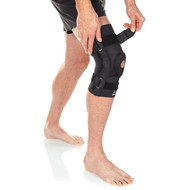
Knee discomfort has a way of sneaking into regular life. It’s not just an “athlete” problem. If your day includes a lot of walking, long hours on your feet, stairs, physical work, or simply joints that don’t feel as steady as they used to, you’ve probably felt how quickly a knee can start dictating what you do and how you do it.
If your knee feels unsteady, like it might shift, buckle, or hesitate when you turn or step down, you’re not alone. That’s often the moment people start looking at more structured support, including orthopedic braces.
A hinged knee brace is one support option that can help guide knee movement and add stability during activity. It’s not a fix or a cure, but it can be a practical tool when your knee needs a little extra backup.
In this article, we’ll walk through when hinged support may be useful, what it’s designed to do, and when it makes sense to check in with a clinician, especially if symptoms persist or worsen.
What Is a Hinged Knee Brace?
A hinged knee brace is a type of knee brace that includes mechanical hinges on one or both sides of the knee joint. These hinges are positioned alongside the leg to help guide movement as the knee bends and straightens. The goal is to offer extra support and protection during motion—when the joint feels unstable or vulnerable after an injury.
Unlike more basic options, a hinged brace is designed to help manage how the knee moves through its normal range. This can be useful during recovery from sprains, cartilage-related issues, or other conditions where controlled motion helps protect the kneecap, surrounding structures, and soft tissues.
It also helps to understand how hinged braces differ from other common supports:
- Elastic knee sleeves are soft and flexible. They provide compression and warmth, which some people find comforting, but they offer minimal control over knee movement.
- Wraparound supports are easy to put on and adjust with straps, but they typically provide more general support without directing how the knee moves from side to side.
Hinged knee braces fall somewhere in between full restriction and free movement. Designs vary in hinge style, stiffness, strap placement, and overall fit.
Some are built for lighter support, while others offer more structure, depending on the level of protection and stability needed. The right option depends on comfort, activity level, and how much support your knee requires.
Knee Stability Matters
Your knee is designed to move in a very specific way. Ligaments around the joint guide that motion and resist side-to-side forces while you walk, climb stairs, or change direction. The patella (kneecap) also helps the knee move smoothly as it bends and straightens.
When that stability is compromised from wear over time, a past injury, or cartilage tears, the knee can start moving unevenly. That uneven movement may increase strain during everyday actions like walking, lifting, or pivoting. Over time, this added stress can contribute to discomfort and make the joint feel less reliable during activity.
Adding external support manages some of that stress. A brace worn during activity can guide movement and provide extra support where the knee needs it most. While it doesn’t replace proper care or rehabilitation, the right support plays an important role in helping people feel more confident and controlled as they stay active.
Common Signs a Hinged Knee Brace May Be Worth Considering
Knee issues don’t always announce themselves with a single injury. For many people, the signs show up gradually during everyday movement. Below are common situations where added knee support may be worth considering. Keep in mind that symptoms vary, and support needs are always individual.
Feeling of knee instability
If your knee feels like it might “give way” or buckle, especially when you change direction or put weight on it, it can make even simple movements feel uncertain.
Discomfort during side-to-side movement
Turning quickly, stepping off curbs, or walking on uneven ground can place extra demands on the knee. Discomfort during these movements may point to reduced control or stability in the joint.
Knee pain after activity
Some people notice knee pain shows up during or after walking, work, or exercise. This can be a sign that the knee is being stressed beyond what it comfortably handles.
History of knee injury
Past ligament injuries or sprains can leave lingering instability, even after healing. If you still feel hesitant or less confident using the knee, added support during activity may help.
Increased symptoms with repetitive use
Long shifts, sports, or physically demanding tasks can cause symptoms to build over time. Repeated loading without enough support or rest can make the knee feel sore or unstable by the end of the day.
These signs don’t mean the same solution is right for everyone. A hinged knee brace is one option among many, and choosing the right level of support depends on your symptoms, activity demands, and professional guidance when needed.
Conditions Commonly Associated with Hinged Knee Brace Use
A hinged knee brace is often used in situations where the knee needs added guidance and support during movement. The examples below are provided for general education only and are not meant to diagnose or replace professional medical advice.
Ligament injuries
Injuries involving the knee ligaments, such as the MCL or LCL, can affect how stable the joint feels, even after initial healing. Hinged support may be used to help guide motion and provide added control during activity when instability is a concern.
Knee sprains or strains
Sprains and strains can occur from sudden movements, overuse, or impact. During recovery, some people use a hinged knee brace to support the joint while easing back into daily movement or activity.
Mild to moderate knee osteoarthritis
In cases of mild to moderate knee osteoarthritis, added external support may help manage stress on the joint during walking or standing. A hinged brace is sometimes used to provide stability and improve confidence with movement, particularly during longer periods on your feet.
Post-injury or post-procedure support
After certain knee injuries or procedures, a clinician may recommend a hinged knee brace as part of a structured recovery plan.
Ongoing knee instability during activity
Some people experience ongoing knee instability during specific activities, even without a recent injury. In these situations, hinged support may be considered to help guide movement and provide a sense of control while staying active.
Only a qualified healthcare professional can properly diagnose knee conditions and recommend appropriate treatment or support options.
Hinged Knee Support Option from BioSkin
If you’ve decided that a hinged knee brace may be appropriate for your situation, BioSkin offers a range of hinged knee support options designed with everyday wear in mind.
One option is the Visco Knee Skin with Conforma® Hinge. This design combines flexible support with an integrated hinge system intended to help guide knee movement during activity. The construction emphasizes comfort and wearability, making it a consideration for people who want structured support without excessive bulk.
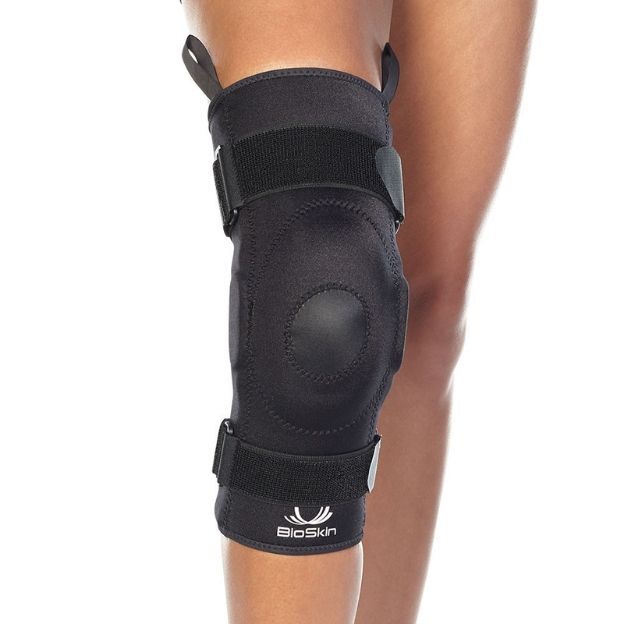
Another option is BioSkin’s Hinged Knee Brace, which offers bilateral hinge support to help manage knee stability during movement. This style is designed to support the knee through bending and straightening while remaining adjustable for fit and comfort during daily use.
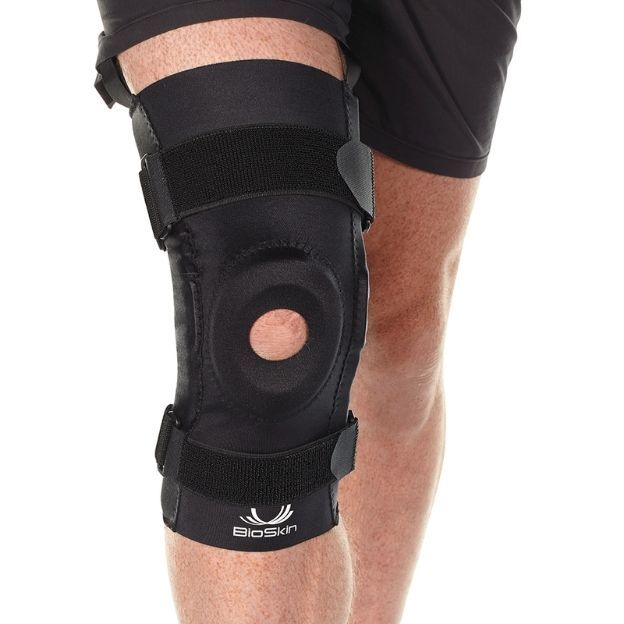
If you’re unsure which level of support is appropriate or how a brace fits into your overall care plan, following the guidance of a qualified clinician is always recommended.
Frequently Asked Questions
How does a hinged knee brace support the knee joint during activity?
A hinged knee brace is designed to help guide the knee joint through bending and straightening while providing added side support. This can help manage movement during walking, standing, or light activity when the knee feels less stable.
Can a hinged knee brace be helpful for cartilage tears?
In some cases, a hinged knee brace may be used to support the knee during activity when cartilage tears contribute to discomfort or instability. The appropriateness of a brace depends on the type and severity of the tear.
Can you wear a hinged knee brace all day?
Some people wear a hinged knee brace during longer periods of activity, while others use it only for specific tasks. Comfort, proper fit, and symptom response should guide wear time, and prolonged use should be discussed with a clinician.
When should you see a clinician instead of relying on a knee brace?
If pain, swelling, or instability worsen, or if symptoms continue despite using a brace, it’s important to seek evaluation from a qualified healthcare professional. A brace can provide support, but it does not replace diagnosis or treatment.