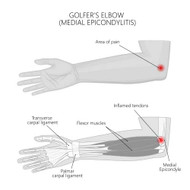
Golfer's elbow is a common condition that causes pain and tenderness on the inside of the elbow. Despite its name, you don't have to play golf to develop it. Repetitive gripping, lifting, throwing, wrist movements, and other activities that place repeated stress on the forearm can contribute to golfer's elbow.
Also known as medial epicondylitis, golfer's elbow affects the tendons that connect the muscles of the forearm to the inside of the elbow. Pain may stay around the elbow or extend down the inner forearm, making everyday activities such as gripping, lifting, or turning a doorknob uncomfortable.
If you're experiencing inner elbow pain, understanding the causes, symptoms, and treatment options for golfer's elbow can help you determine what steps to take next. Treatment may include activity modification, ice, pain management, physical therapy, stretching and strengthening exercises, and supportive equipment.
What Is Golfer's Elbow?
Golfer's elbow is an overuse condition involving the tendons on the inside of the elbow.
These tendons connect muscles in the forearm to the medial epicondyle, the bony prominence on the inner side of the elbow. The muscles and tendons in this area help control movements of the wrist, hand, and fingers.
Repeated or forceful gripping, wrist movements, lifting, throwing, or twisting can place stress on these tissues. Over time, repetitive loading may contribute to pain and irritation around the tendon attachment.
The medical term for golfer's elbow is medial epicondylitis.
Although golf can contribute to the condition, golfer's elbow isn't limited to golfers. Tennis and pickleball players, weightlifters, manual workers, and people who perform repetitive arm movements can also develop symptoms.
Golfer's elbow is one of several conditions that can affect the elbow. For more information about common elbow conditions and injuries, visit BioSkin's Elbow Injuries resource.
What Causes Golfer's Elbow?
Golfer's elbow usually develops from repeated stress on the muscles and tendons that control the wrist and fingers.
Activities that can contribute to golfer's elbow include:
- Playing golf
- Playing tennis
- Playing pickleball
- Throwing sports
- Weightlifting
- Repetitive gripping
- Repeated lifting or carrying
- Using hand tools
- Construction and manual work
- Repetitive wrist movements
- Activities that require forceful wrist or finger movements
A sudden increase in activity can also contribute. For example, playing more golf than usual, starting a new workout program, increasing training intensity, or taking on a physically demanding task can increase the workload placed on the forearm.
In some cases, there isn't one specific activity responsible for the condition. Golfer's elbow can develop gradually as the amount of stress placed on the forearm increases over time.
Golfer's Elbow Risk Factors
Certain activities and changes in activity level may increase your risk of developing golfer's elbow.
Risk factors can include:
- Repetitive gripping
- Repetitive wrist movements
- Frequent lifting
- Throwing activities
- Playing golf or other racquet sports
- Weightlifting
- Manual labor
- Using hand tools
- Suddenly increasing exercise or sports activity
- Poor technique during repetitive activities
The condition is particularly associated with activities that repeatedly load the muscles and tendons on the inside of the forearm.
Golfer's Elbow Symptoms
The most common golfer's elbow symptom is pain or tenderness on the inside of the elbow.
Other symptoms may include:
- Pain that extends into the inner forearm
- Tenderness around the medial epicondyle
- Pain when gripping or squeezing objects
- Pain when lifting
- Pain when bending the wrist
- Weakness in the hand or forearm
- Stiffness around the elbow
- Pain during repetitive wrist or arm movements
Symptoms often develop gradually. You may initially notice discomfort only during or after an activity. As the condition progresses, pain may begin to interfere with everyday activities such as carrying objects, opening a jar, turning a doorknob, or making a fist.
What Does Golfer's Elbow Feel Like?
Golfer's elbow may feel like an ache, soreness, or tenderness around the inside of the elbow.
The pain may become worse when you:
- Grip a golf club
- Carry a bag
- Lift an object
- Shake hands
- Turn a doorknob
- Make a fist
- Bend your wrist
- Throw a ball
- Use hand tools
The discomfort can extend from the inside of the elbow into the forearm.
Numbness and tingling aren't typical symptoms of golfer's elbow itself. Because the ulnar nerve passes close to the inside of the elbow, irritation of that nerve can cause numbness or tingling that travels into the hand or fingers.
Where Does Golfer's Elbow Hurt?
Golfer's elbow typically causes pain on the inside of the elbow, around the medial epicondyle.
This is one of the easiest ways to distinguish golfer's elbow from tennis elbow.
Golfer's elbow: pain generally occurs on the inside of the elbow.
Tennis elbow: pain generally occurs on the outside of the elbow.
Both conditions can result from repetitive forearm activity, but they affect different areas of the elbow.
If you're experiencing elbow pain and aren't sure which condition may be responsible, a healthcare professional can evaluate your symptoms.
Who Gets Golfer's Elbow?
Anyone who repeatedly uses the muscles and tendons of the forearm can develop golfer's elbow.
It can affect:
- Golfers
- Tennis players
- Pickleball players
- Baseball and softball players
- Weightlifters
- Manual workers
- Construction workers
- Tradespeople
- People who frequently use hand tools
- People who perform repetitive gripping or lifting
You don't have to participate in sports to develop golfer's elbow. Repetitive movements at work or during everyday activities can also place stress on the forearm.
Golfer's Elbow in Golfers
Golf involves repeated gripping, swinging, and forearm movements. These actions can place stress on the tendons around the inner elbow.
Changes in playing frequency, training volume, swing mechanics, or equipment may increase the demands placed on the forearm.
If golfing causes or worsens your elbow pain, consider reducing your playing frequency or intensity while symptoms are active. A qualified golf professional may also be able to help evaluate your swing mechanics and equipment.
However, golfer's elbow isn't exclusive to golfers. The same condition can develop from many other repetitive activities.
Golfer's Elbow in Tennis and Pickleball Players
Tennis and pickleball players can also develop golfer's elbow because both sports involve repetitive gripping, swinging, and wrist movements.
A sudden increase in playing frequency or training intensity may increase stress on the muscles and tendons around the elbow.
If you develop pain on the inside of the elbow after playing tennis or pickleball, golfer's elbow is one possible cause. Other conditions can produce similar symptoms, so persistent or worsening pain should be evaluated by a healthcare professional.
How Is Golfer's Elbow Diagnosed?
Diagnosis begins with a thorough physical examination of the elbow and a thorough review of your symptoms, medical history, and activities.
Your provider may ask:
- Where does your elbow hurt?
- When did the symptoms begin?
- Which activities make the pain worse?
- Have you recently changed your exercise or work routine?
- Do you have weakness?
- Do you have numbness or tingling?
- Did your symptoms begin after an injury?
During a thorough physical examination, the provider may check for tenderness around the inside of the elbow and assess how your wrist, fingers, and elbow respond to different movements.
Imaging isn't always necessary. An X-ray may be used to rule out other causes of elbow pain, such as a fracture or arthritis. If symptoms are severe, persistent, or unclear, your healthcare professional may recommend additional testing such as ultrasonography to confirm tendinosis and identify partial tears, or MRI to evaluate tendon damage in golfer's elbow.
Golfer's Elbow Treatment
There isn't one treatment that works for everyone. The appropriate golfer's elbow treatment depends on your symptoms, activity level, and how long you've been experiencing pain.
Most people begin with conservative treatment designed to reduce stress on the elbow, manage symptoms, and gradually restore strength and function. Doctors typically recommend conservative treatment options first, and these commonly include rest and physical therapy.
If conservative treatment options fail and symptoms persist for 6-12 months, surgical intervention may be considered, though only about 10% of cases require it.
1. Modify Activities That Cause Pain
Reducing or temporarily modifying activities that aggravate your elbow is often an important first step.
You may not need to stop all activity. Instead, consider reducing the intensity, frequency, or duration of movements that repeatedly cause pain.
For example, a golfer may temporarily reduce the number of rounds played. Someone who performs repetitive manual work may need to modify certain tasks or take more frequent breaks.
The goal is to reduce unnecessary stress on the affected tissues while allowing the elbow to recover.
2. Use Ice
Ice may provide temporary relief from pain after activities that aggravate the elbow.
A healthcare professional may recommend applying an ice pack for short periods while symptoms are active. Protect your skin by wrapping the ice pack in a thin towel.
Mayo Clinic notes that ice can be used for 15 to 20 minutes at a time several times a day during an active period of symptoms.
3. Consider Pain-Relief Options
Some people use over-the-counter pain relievers to manage discomfort from golfer's elbow, and over-the-counter NSAIDs can provide short-term pain relief.
Options may include anti-inflammatory medications such as ibuprofen or naproxen, or acetaminophen, depending on the individual's circumstances.
Talk with your healthcare professional or pharmacist about which option is appropriate for you, particularly if you take other medications or have existing health conditions.
Corticosteroid injections may also provide short-term pain relief when a clinician considers them appropriate.
Pain relief can make symptoms easier to manage, but it does not address the underlying activity or movement patterns contributing to the condition.
4. Stretching and Strengthening Exercises
Stretching and strengthening can be important components of golfer's elbow recovery.
A physical therapist can help develop an exercise program based on your symptoms, strength, and activity level, and physical therapy may include eccentric strengthening exercises for the wrist flexors to aid recovery.
Exercises may focus on:
- Forearm strength
- Wrist strength
- Stretching exercises to improve flexibility
- Grip strength
- Gradual tendon loading
- Improving movement patterns
Strengthening should generally be introduced gradually. Returning to heavy gripping, lifting, or sports too quickly may aggravate symptoms.
Physical therapy is commonly used as part of conservative treatment for golfer's elbow, and occupational therapy may also help with activity modification and return-to-work strategies.
5. Use a Golfer's Elbow Brace or Support
A forearm brace or support can be another option for people who need additional support during activity.
A counterforce-style support is worn around the forearm below the elbow. It can provide targeted compression and may help reduce stress on the affected area during certain activities.
BioSkin provides elbow support options for people dealing with common elbow conditions.
You can explore the full range of Elbow Braces to find support options designed for different elbow needs.
A brace should complement an overall treatment and recovery plan. It shouldn't be used to ignore significant or worsening pain.
6. Gradually Return to Activity
As your symptoms improve, gradually return to the activities that previously caused pain.
Starting at a lower level of activity allows you to monitor how your elbow responds before increasing the workload.
For golfers, this might mean beginning with shorter practice sessions before returning to a full round. For athletes and workers, a gradual increase in workload can help reduce the chance of aggravating the elbow.
If pain returns as you increase activity, reduce the workload and consider speaking with a healthcare professional.
How Long Does Golfer's Elbow Take to Heal?
Golfer's elbow can take time to improve.
Some people experience improvement within weeks or months, while others may have symptoms for longer. Recovery depends on factors such as the duration and severity of symptoms, the amount of stress placed on the elbow, and how consistently aggravating activities can be modified.
Mayo Clinic notes that recovery can take several months, even with consistent treatment.
Factors that can affect recovery include:
- How long you've had symptoms
- How much stress is placed on the elbow
- Whether you can modify aggravating activities
- Your strength and mobility
- Your response to treatment
- Whether another condition is contributing to your symptoms
If your symptoms aren't improving or continue to interfere with everyday activities, consult a healthcare professional.
Can Golfer's Elbow Heal on Its Own?
Golfer's elbow can improve with time and conservative treatment.
However, that doesn't mean you should continue activities that consistently make your symptoms worse.
Reducing aggravating activities, gradually strengthening the forearm, and addressing factors that contributed to the condition can support recovery.
In many cases, consistent self-care and physical therapy are enough to improve symptoms without surgery.
If symptoms persist despite conservative care, a healthcare professional can evaluate the condition and discuss additional treatment options.
Can You Play Golf With Golfer's Elbow?
You may be able to remain active while recovering, but continuing to play through significant pain can make symptoms more difficult to manage.
If golfing aggravates your elbow, consider temporarily reducing your playing frequency or intensity.
You may also want to review:
- Golf swing technique
- Grip
- Club selection
- Training volume
- Practice frequency
- Warm-up routine
- Forearm strength
A golfer's elbow support may provide additional support during activity, but it shouldn't be used as a way to push through significant or worsening pain.
Golfer's Elbow vs. Tennis Elbow
Golfer's elbow and tennis elbow are both overuse conditions involving the forearm, but they generally affect opposite sides of the elbow.
Golfer's elbow, also called medial epicondylitis, typically causes pain on the inside of the elbow.
Tennis elbow, also called lateral epicondylitis, typically causes pain on the outside of the elbow.
Neither condition is limited to the sport in its name. Repetitive gripping, lifting, throwing, and wrist movements can contribute to either condition.
If you're unsure which condition may be causing your symptoms, a healthcare professional can help determine the appropriate diagnosis.
How to Prevent Golfer's Elbow
You can't prevent every case of golfer's elbow, but you can take steps to reduce unnecessary stress on the muscles and tendons around the elbow.
Consider:
- Increase activity gradually
- Warm up before sports or exercise
- Stretch the wrist and forearm
- Strengthen the forearm muscles
- Use proper technique
- Avoid sudden increases in training volume
- Use appropriately sized equipment
- Take breaks during repetitive activities
- Allow adequate recovery between demanding activities
- Modify activities that consistently cause pain
For golfers and other athletes, reviewing technique and equipment may be helpful if symptoms develop.
When Should You See a Doctor for Golfer's Elbow?
Consider seeing a healthcare professional if:
- Your elbow pain is severe
- Symptoms continue to worsen
- Pain interferes with everyday activities
- You have significant weakness
- Symptoms don't improve with conservative treatment
- You experience numbness or tingling
- Your elbow becomes significantly swollen or warm
- Symptoms began after a significant injury
- You have difficulty moving the elbow
Numbness, tingling, or weakness may indicate involvement of the ulnar nerve or another condition rather than golfer's elbow alone.
You should also seek medical evaluation after a significant elbow injury, particularly if you experience deformity, substantial swelling, loss of movement, or severe pain.
Frequently Asked Questions About Golfer's Elbow
What is golfer's elbow?
Golfer's elbow is an overuse condition that causes pain and tenderness on the inside of the elbow. It is also known as medial epicondylitis.
What causes golfer's elbow?
Golfer's elbow can develop from repeated or forceful use of the wrist and forearm. Golf, tennis, pickleball, throwing sports, weightlifting, manual work, and repetitive gripping can all contribute.
What are the symptoms of golfer's elbow?
Common symptoms include pain and tenderness on the inside of the elbow, inner forearm discomfort, weakness, stiffness, and pain when gripping, lifting, or moving the wrist.
What is the best treatment for golfer's elbow?
There isn't one treatment that is best for everyone. Golfer's elbow treatment may include activity modification, ice, pain management, physical therapy, stretching, strengthening exercises, and supportive equipment.
How do you treat golfer's elbow at home?
Conservative care may include temporarily reducing activities that aggravate your elbow, using ice for temporary pain relief, and following an appropriate stretching and strengthening program. If symptoms persist or worsen, consult a healthcare professional.
Does a golfer's elbow brace help?
A forearm brace or counterforce-style support may provide additional support during activity and can be part of a broader conservative treatment plan. The appropriate type and fit depend on your symptoms and activity.
How long does golfer's elbow take to heal?
Recovery varies from person to person. Some people improve within weeks or months, while others may experience symptoms for longer. Consistent conservative treatment and gradual return to activity can support recovery.
Can you get golfer's elbow without playing golf?
Yes. Despite its name, golfer's elbow can affect anyone who repeatedly uses the muscles and tendons of the forearm. Tennis players, pickleball players, weightlifters, manual workers, and others can develop the condition.
Is golfer's elbow the same as medial epicondylitis?
Yes. Golfer's elbow is commonly known as medial epicondylitis. It affects the tendons around the inside of the elbow.
What is the difference between golfer's elbow and tennis elbow?
Golfer's elbow generally causes pain on the inside of the elbow, while tennis elbow generally causes pain on the outside. Both can develop from repetitive forearm activity.